
COMMERCIAL ELECTRICAL TROUBLESHOOTING
COMMERCIAL ELECTRICAL TROUBLESHOOTING IN ATLANTA, GA
A breaker serving a continuous load already sits at 80% of its rating by code, which is why a circuit tripping every afternoon is often carrying exactly what it was designed to carry. 5 Star Electrical LLC diagnoses faults like that for businesses across Atlanta, Georgia and nearby Dunwoody, from flickering LEDs to voltage imbalance, warm breakers, and open neutrals.
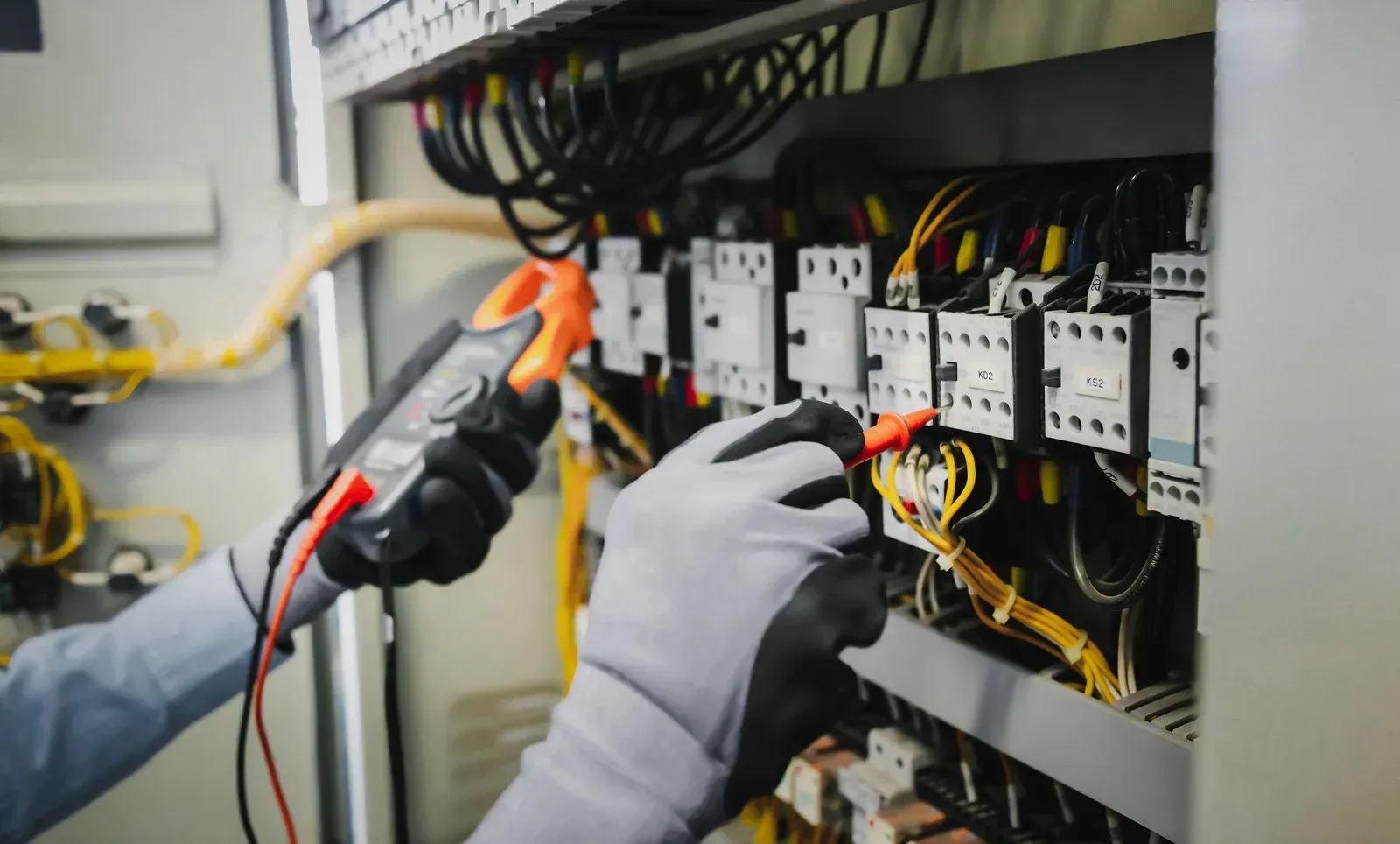
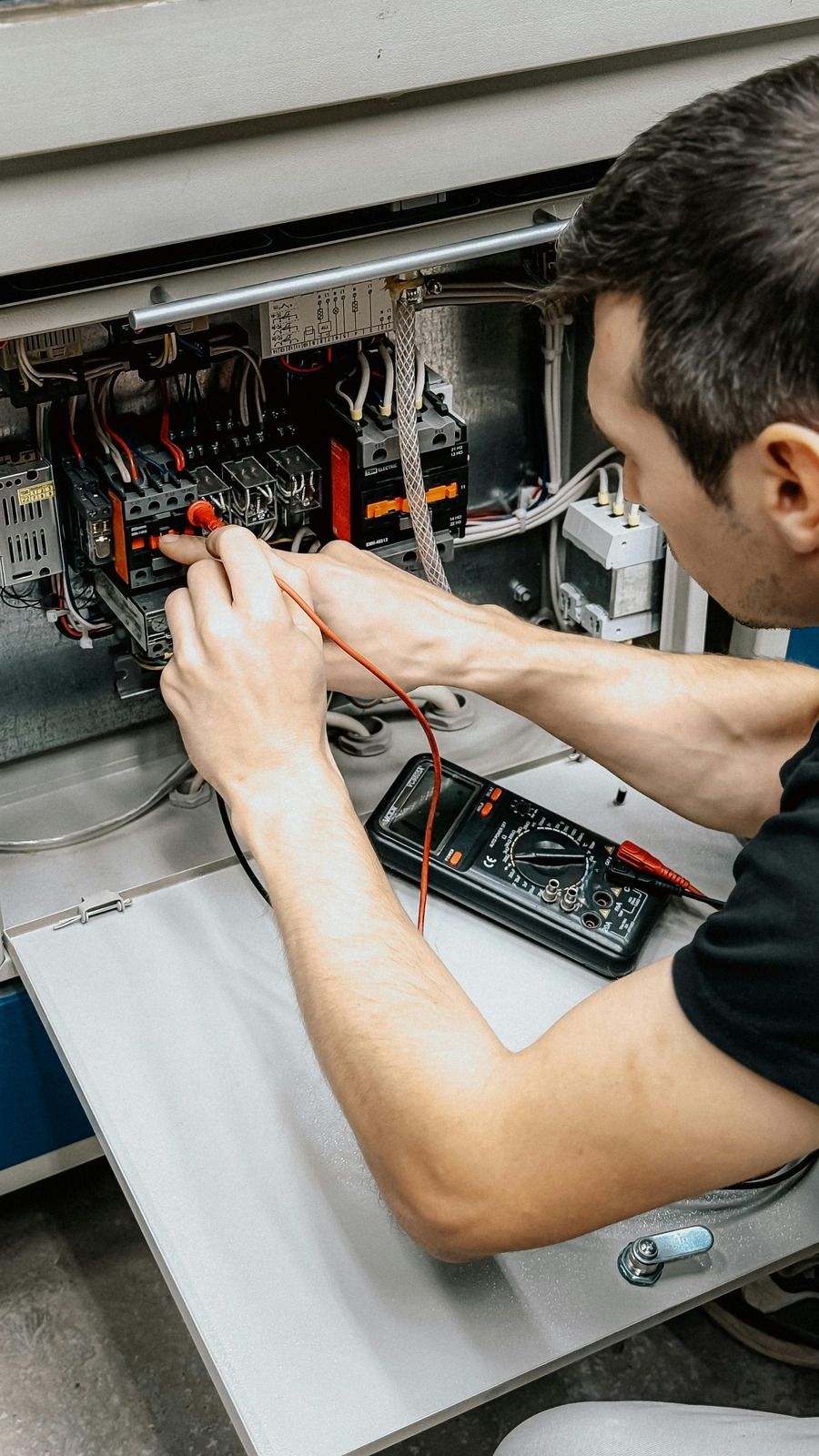
GUESSING IS EXPENSIVE. MEASURING IS NOT.
Swapping a breaker takes 20 minutes and solves nothing if the fault is a loose lug 3 feet upstream. We would rather spend an hour with a meter and know, than spend a month replacing components while the same symptom keeps coming back on your dime. Data first, parts second. That order saves money every single time.
Every diagnostic call ends with a written summary: what we measured, what we found, what we corrected, and what we recommend watching. Your facility team should never have to take our word for it.
✓ Clamp meters, power loggers, and thermal imaging on every call
✓ Root cause identified before any part is replaced
✓ Written findings and recommendations after each visit
✓ 24/7 response for faults that cannot wait
COMMERCIAL ELECTRICAL TROUBLESHOOTING
THE BREAKER IS RARELY THE ACTUAL PROBLEM.
A breaker is a messenger. It opens because something downstream asked for more current than the circuit can safely deliver, or because a conductor is leaking where it should not. Replacing the messenger changes nothing except how long the real fault stays hidden. We start at the load, work back through the terminations, and read the panel with a thermal camera before anybody reaches for a screwdriver or a catalog number.
METRO ATLANTA BUILDINGS AGE IN PREDICTABLE WAYS.
Strip retail from the 1980s, office parks from the 1990s, and warehouses converted three tenants ago all fail in familiar patterns: aluminum feeders that were never re-torqued, panels loaded past their directory, and neutrals shared by circuits that should not share anything. Knowing what a building of that vintage usually hides shortens the search enormously, and we have opened a lot of them around here.
THE FAULT IS ALWAYS SOMEWHERE. WE JUST KEEP LOOKING.
Intermittent problems are the ones that break people. A trip that happens twice a month, a dimming that only shows up when the compressor and the oven run together, a warm panel with nothing obviously wrong. Those calls reward patience and instrumentation, not confidence. We log circuits over days when we need to, compare readings across phases, and refuse to close a ticket with the phrase we could not reproduce it. Something caused it.
WHAT A PROPER DIAGNOSIS SAVES YOU
DOWNTIME THAT ENDS FOR GOOD
A fault traced to its source stops recurring, which means your team stops budgeting for the same interruption every quarter and stops planning around a circuit nobody trusts.
EQUIPMENT THAT LASTS LONGER
Voltage imbalance and sustained sags quietly cook motors and drives. Correcting the supply problem protects assets that cost far more than the diagnostic visit that found it.
A FIRE RISK REMOVED
Loose terminations and overheated conductors are the beginning of most electrical fires. Thermal imaging finds them while they are still a maintenance item rather than an insurance claim.
FEWER PARTS THROWN AT THE PROBLEM
Measuring first means you pay for one correct repair instead of three plausible ones, and your maintenance budget stops funding a long process of elimination that nobody documents.
A RECORD YOUR TEAM CAN USE
Written findings, photographs, and meter readings give your facility staff a baseline, so the next unusual reading has something to be compared against later on.
CONFIDENCE AT INSPECTION TIME
Corrections documented against current code requirements mean an inspector or insurer reviewing the building sees a system that was maintained, not one that was patched.
Insert Title

Insert Title
Lorem ipsum dolor sit amet, consectetur adipiscing elit. Sed do eiusmod tempor incididunt ut labore et dolore magna aliqua. Ut enim ad minim veniam, quis nostrud exercitation ullamco laboris nisi ut aliquip ex ea commodo consequat.
WHAT WE DIAGNOSE
OUR COMMERCIAL TROUBLESHOOTING WORK
Symptoms rarely arrive alone, and the same complaint can have four different causes in four different buildings. These are the faults we get called out for most often across Metro Atlanta.
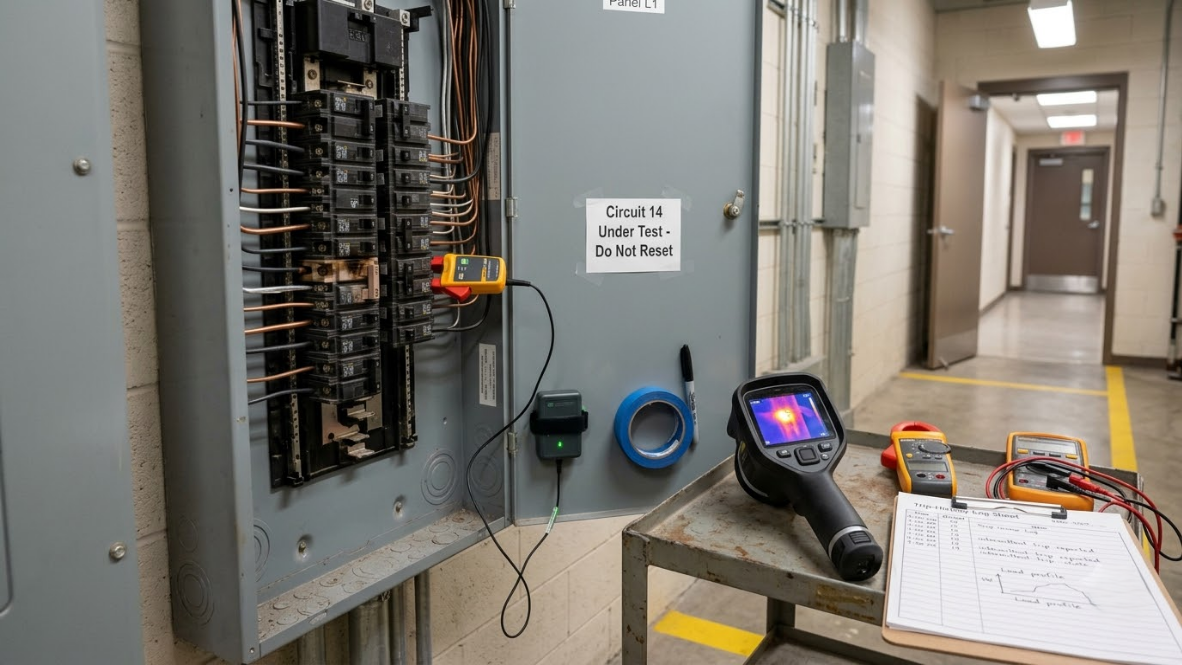
REPEAT TRIPS
Breaker and Overload Diagnostics
Logging the circuit through a full operating cycle to see whether the load genuinely exceeds capacity, a device is faulting, or the breaker itself has weakened from years of thermal cycling.
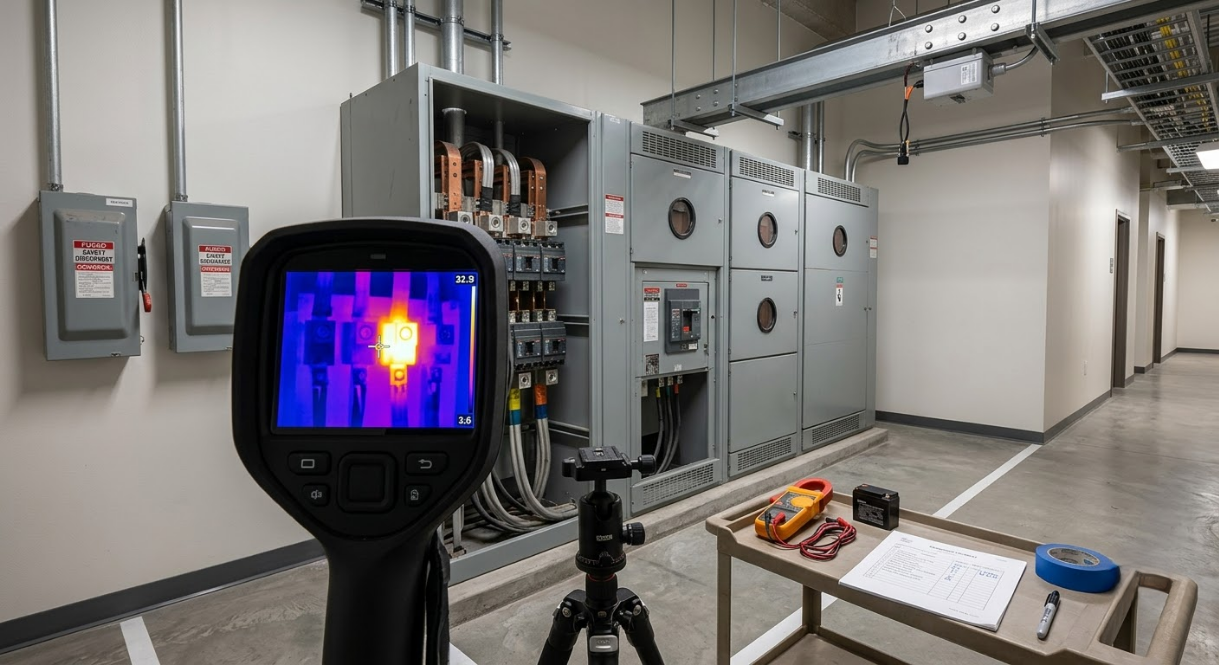
HIDDEN HEAT
Thermal Imaging and Connection Surveys
Scanning panels, disconnects, and busway under load to find terminations running hotter than their neighbors. Loose lugs show up on camera long before they announce themselves any other way at all.
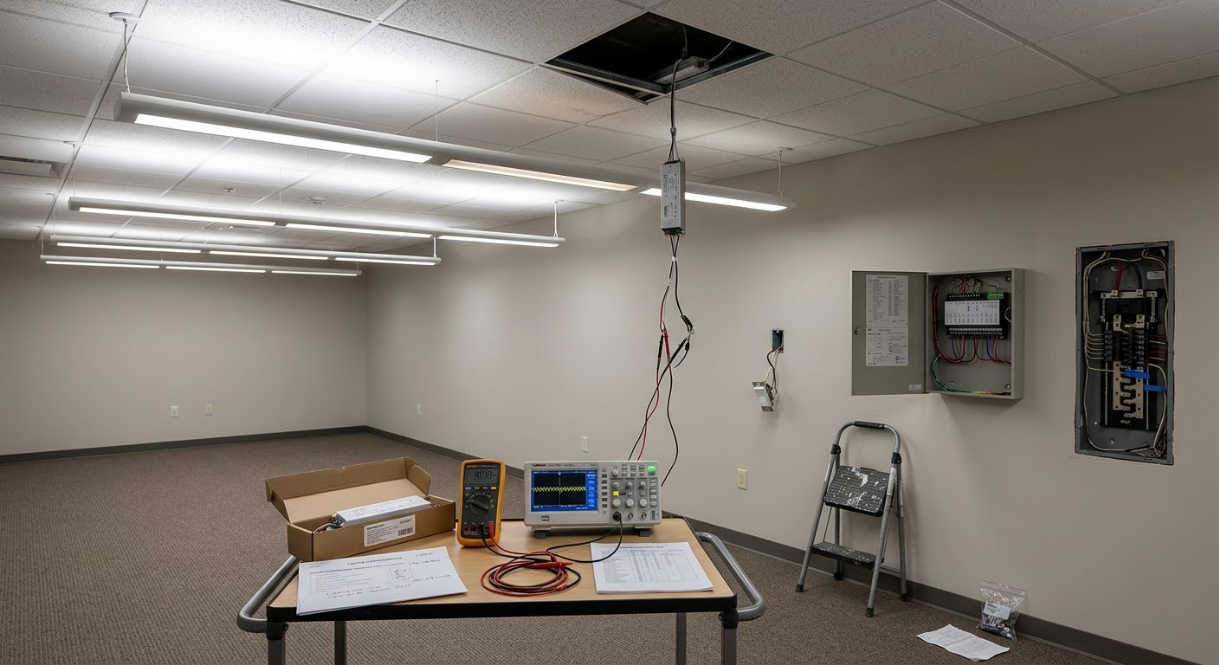
BAD LIGHT
Flicker, Dimming, and Control Faults
Tracing whether the problem is driver incompatibility, a dimming protocol mismatch, a shared neutral, or genuine voltage instability, because each one looks identical from underneath the fixture on the floor.
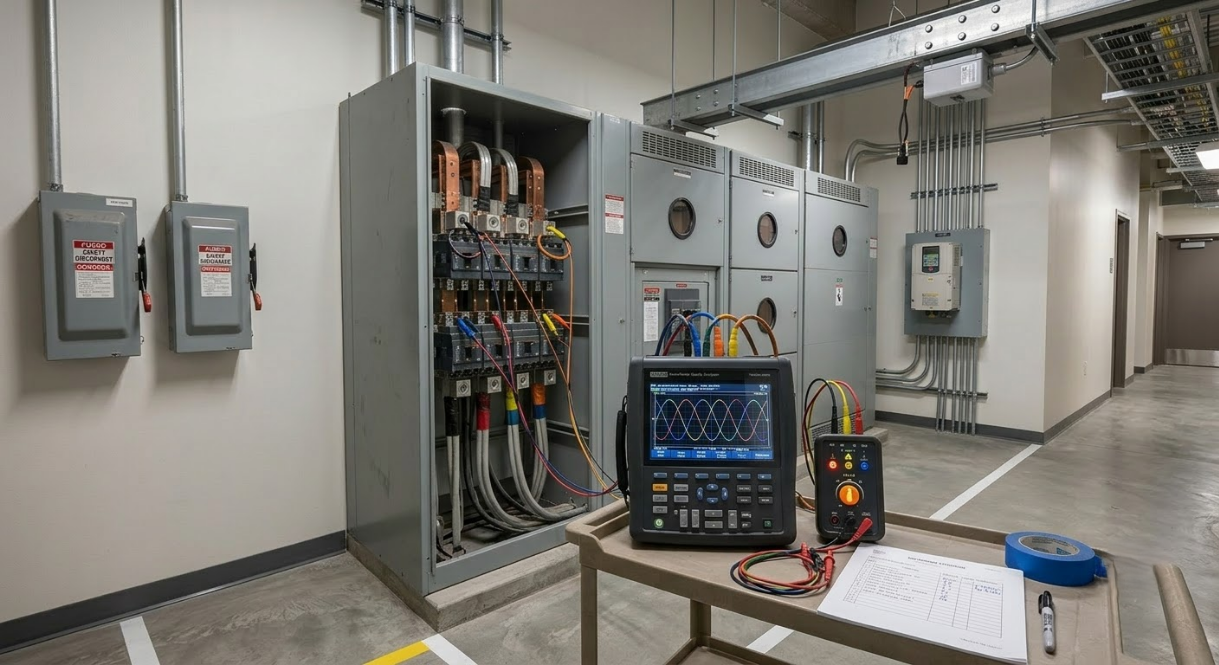
THREE PHASE
Voltage Imbalance and Phase Analysis
Measuring line-to-line and line-to-neutral values across all phases, checking rotation, and identifying the uneven loading or supply issue quietly shortening the life of every motor and drive in the building.
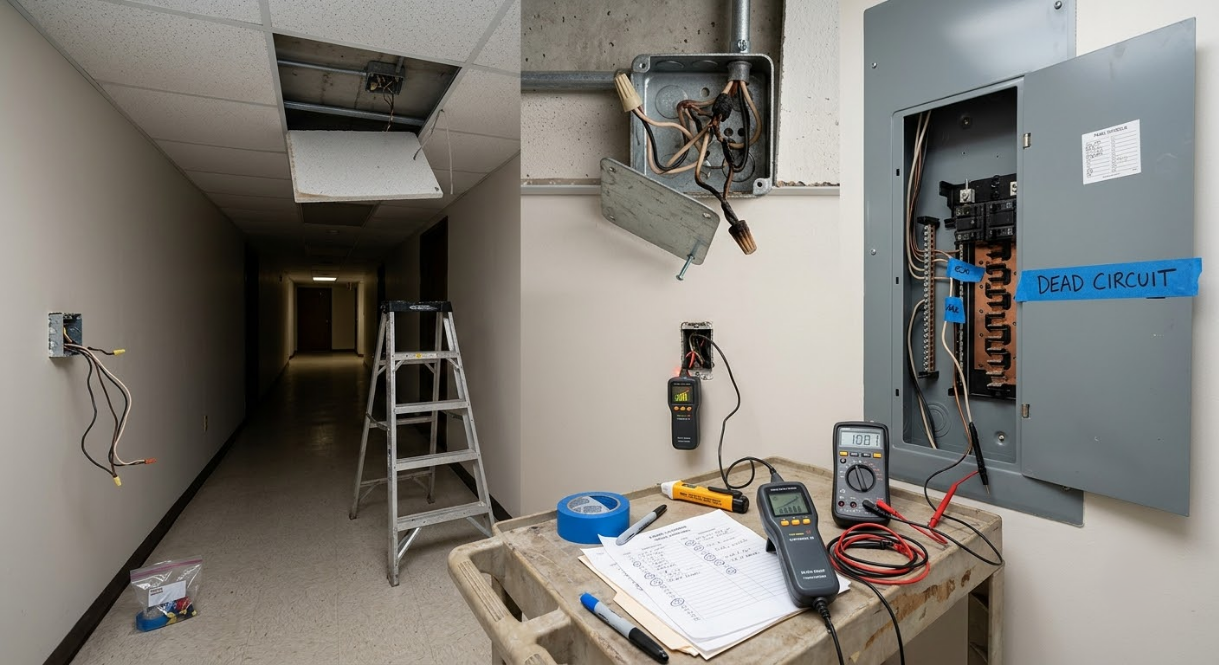
LOST POWER
Dead Circuits and Open Neutral Location
Isolating where a circuit stops carrying, whether from a failed splice buried in a junction box, a damaged conductor, or an open neutral that leaves half a building behaving strangely.
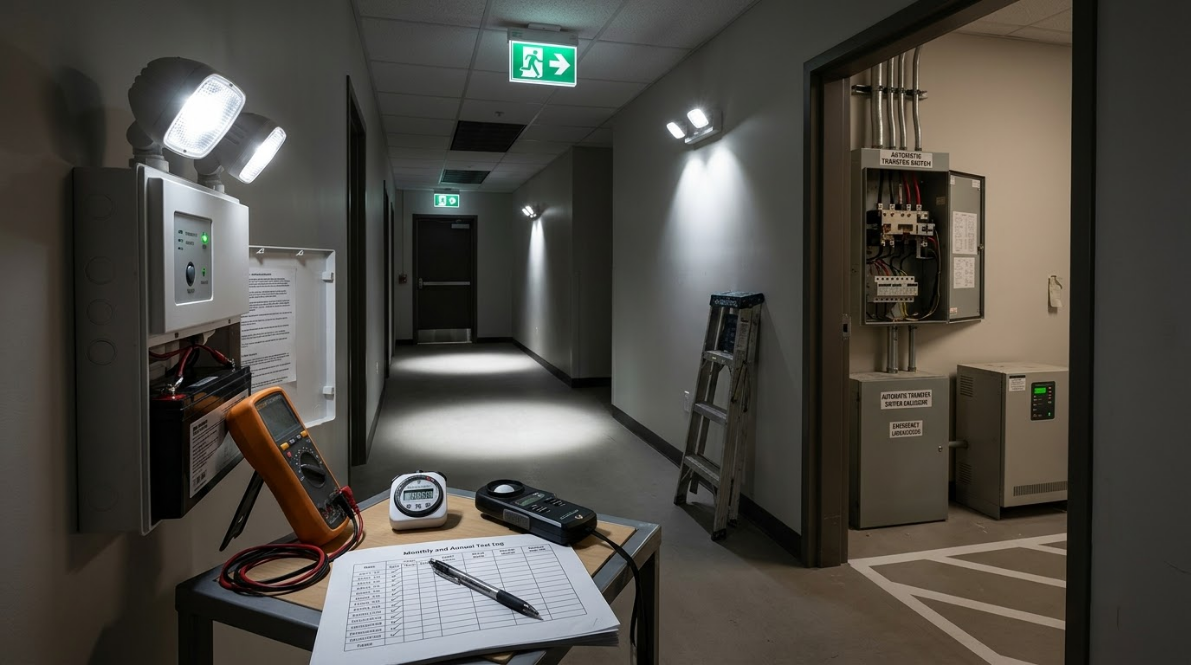
EMERGENCY SYSTEMS
Egress Lighting and Standby Testing
Verifying that emergency fixtures hold their required 90 minutes, that transfer equipment picks up within its window, and that a failed monthly test is not waiting for the fire marshal to find.
THE WORD ON OUR WORK
WHAT OUR CLIENTS SAY.
Restaurants, clinics, and warehouse operators call us when somebody else has already been out twice. The difference is usually documentation and patience rather than a special tool. Read what facility managers across Georgia have said after we finally found their fault.
THE WORD ON OUR WORK
WHAT OUR CLIENTS SAY.
Restaurants, clinics, and warehouse operators call us when somebody else has already been out twice. The difference is usually documentation and patience rather than a special tool. Read what facility managers across Georgia have said after we finally found their fault.
Common Questions
FREQUENTLY ASKED QUESTIONS.
These come up on almost every diagnostic call, usually while we are still setting up the meter. Short answers below, and the longer version happens on site.
Why does my breaker keep tripping even after I reset it?
Because the condition that opened it is still there. Repeated resetting stresses the breaker and can weaken it permanently. Leave the circuit off and have the load, the wiring, and the terminations checked before anybody switches it on again.
Is a frequently tripping breaker really that big of a deal?
Yes. It is either doing its job against a genuine fault or failing to hold against a normal load, and both answers point somewhere serious. Nuisance tripping is the system telling you something before it stops asking politely.
Why do LED lights flicker in a commercial building?
Usually a mismatch between driver and dimmer, a control protocol the fixture does not speak, or a shared neutral carrying more than it should. Genuine voltage instability is the least common cause, though it is the most serious.
What are the signs of a loose neutral?
Lights that brighten in one room while dimming in another, electronics failing in clusters, and voltage readings that swing well above or below 120 depending on the load. It is dangerous and worth treating as urgent rather than annoying.
What causes voltage imbalance in a three-phase system?
Single-phase loads distributed unevenly across the phases, a failing connection on one leg, or a supply problem upstream. Even a few percent of imbalance drives motor heating up sharply and shortens equipment life by a considerable margin over time.
Why has my energy bill jumped without anything changing?
Something is running that should not be, or running harder than it should. 5 Star Electrical LLC logs circuits over several days for businesses in Atlanta, GA, which usually finds the load nobody realized had been running continuously.
What is the difference between an overload, a short circuit, and a ground fault?
An overload is too much current on a healthy circuit. A short is current bypassing the load through a hot-to-neutral contact. A ground fault is current escaping to ground. Each one leaves different evidence behind in the panel.
When is an electrical problem an emergency?
Smoke, burning smells, sparking, water contacting equipment, or a panel too hot to touch all mean shut it down now. 5 Star Electrical LLC responds around the clock across Atlanta, GA for exactly those calls, day or night.
HOW WE WORK
FROM SYMPTOM TO SOLVED, HERE IS HOW.
STEP 01
Listening to the History
We ask when it started, what was installed or changed recently, what makes it worse, and who has already been out. Half of a diagnosis lives in that conversation before any tool comes out.
STEP 02
Visual and Thermal Survey
Panels open, covers off, camera up. Heat signatures, discoloration, corrosion, and undersized or double-lugged terminations often reveal the problem before we have measured a single value with a meter.
STEP 03
Live Measurement Under Load
Clamp readings on each phase, voltage under real operating conditions, and where necessary a logger left in place for days to catch a fault that only appears when nobody is watching.
STEP 04
Isolating the Fault
Circuits get sectioned and tested until the problem is cornered to a specific run, device, splice, or piece of equipment. We do not stop at plausible, we stop at proven and demonstrable.
STEP 05
Correcting and Verifying
The repair happens, then we retest under the same conditions that produced the symptom. A fix nobody verified is just a hope with an invoice attached to the end of it.
STEP 06
Reporting and Recommendations
You get written findings with readings, photographs, what we corrected, and what we would watch next. If we found something outside the original scope, it goes in the report rather than into a surprise.
GET YOUR FREE ESTIMATE
FIND OUT WHAT IS ACTUALLY WRONG, FREE.
Tell us the symptom, the building, and when it happens. Our estimate for a diagnostic visit costs nothing, and the report afterward belongs to you whether or not we do the repair. Start on our contact page.
WHAT YOUR DIAGNOSTIC VISIT COVERS:
✓ Full visual and thermal survey of affected gear
✓ Live measurements under real operating load
✓ Phase balance and neutral integrity checks
✓ Fault isolated to a specific run or device
✓ Written findings with readings and photographs
✓ Clear recommendations ranked by urgency