
SWITCHGEAR INSTALLATION
SWITCHGEAR INSTALLATION & UPGRADES IN ATLANTA, GA
Commercial switchgear carries a 20 to 30 year service life, and replacement lead times on medium-voltage lineups now run 52 to 80 weeks depending on class, which makes reactive planning expensive. 5 Star Electrical LLC assesses, retrofits, and replaces distribution gear across Atlanta, Georgia and nearby Lawrenceville, covering metal-enclosed and metal-clad lineups, main breakers, retrofills, and the feeders leaving them.
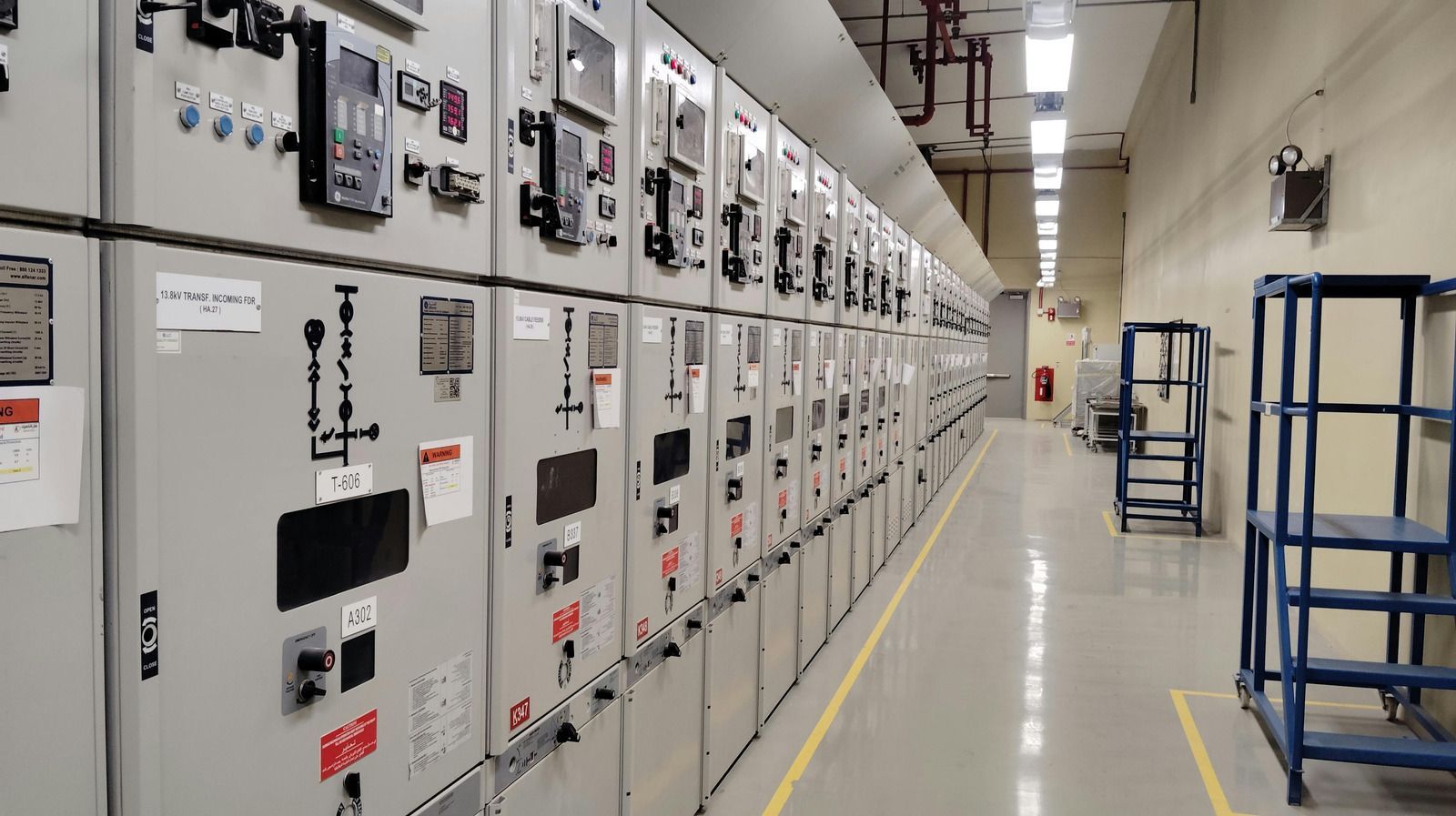
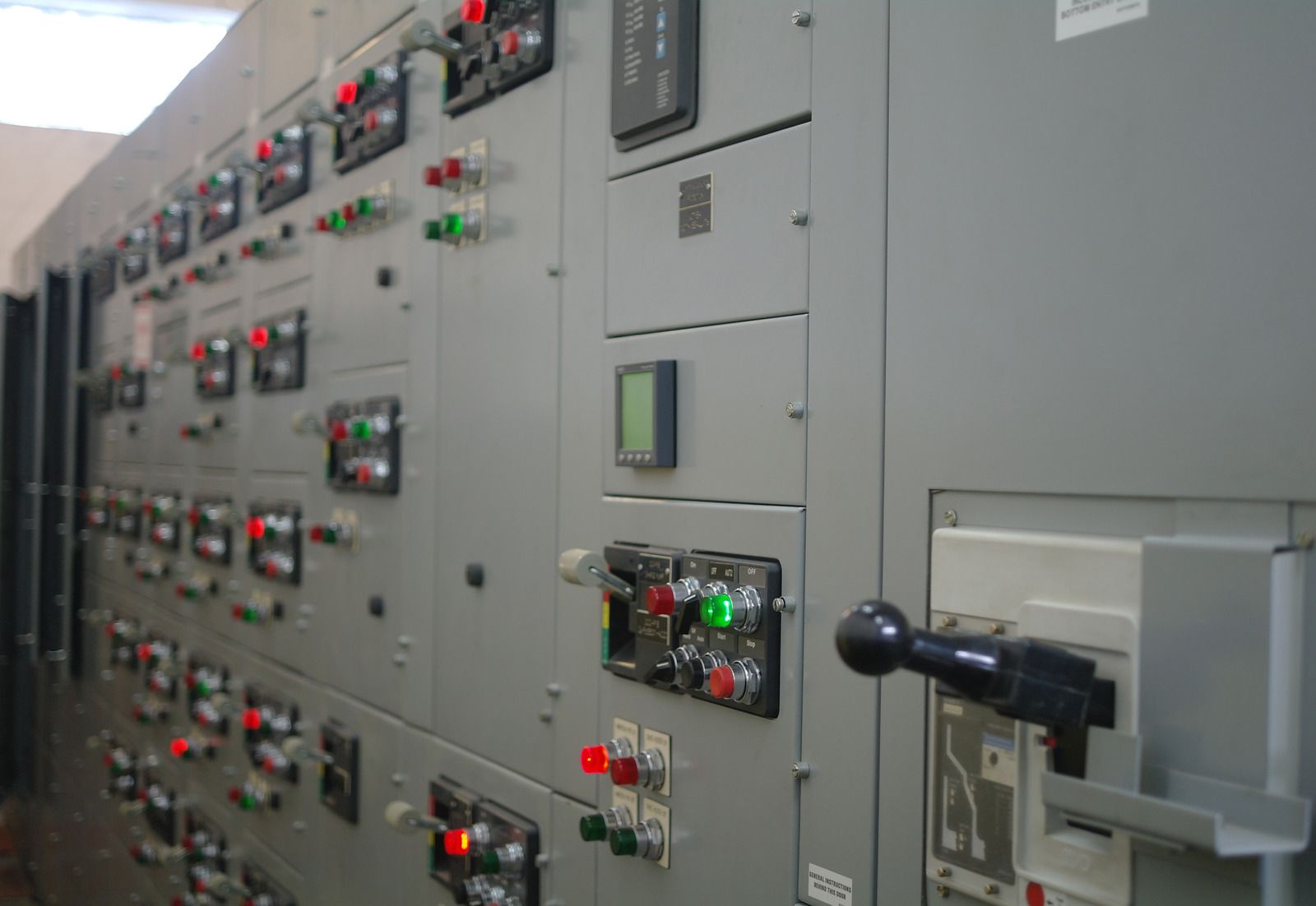
POWER STAYS ON DURING THE CHANGEOVER.
The hardest part of a switchgear project is rarely the gear. It is the 6 hours the building cannot be dark, the tenant who cannot lose refrigeration, and the server room that will not tolerate a blink. We plan the cutover backward from those constraints, then build the temporary feed that makes them survivable.
Every project gets a written sequence of operations before the day arrives, so your staff, your tenants, and your utility contact all know what happens and when it happens on the day.
✓ Available fault current verified against equipment ratings
✓ Written sequence of operations before every cutover
✓ Temporary power staged where downtime is not an option
✓ Arc flash labeling updated after system changes
SWITCHGEAR INSTALLATION & UPGRADES
GEAR THAT FAILS TAKES THE WHOLE BUILDING WITH IT.
A branch circuit failing inconveniences a room. A main lineup failing empties the building and keeps it empty until replacement gear arrives, which today can mean a year. That asymmetry is why switchgear deserves attention it rarely gets: infrared surveys, torque checks, insulation testing, and an honest conversation about age. We would rather find a degrading bus connection during a scheduled inspection than during the outage it eventually causes.
LEAD TIMES ARE THE REAL SCHEDULE NOW.
Metal-enclosed lineups are quoted at 52 to 72 weeks and metal-clad gear can reach 80, with dry-type transformers behind them. Nothing about that improves by waiting. For Metro Atlanta owners, the practical answer is to assess condition early, decide between retrofit and replacement on evidence, and release the purchase order long before the gear becomes urgent. We help you make that call with data.
NOBODY LEARNS GEAR FROM A CATALOG.
Every lineup has quirks the drawings never mention: a bus configuration that will not take a modern breaker, a cable entry with 2 inches less room than the submittal claimed, a ground bar somebody moved during a renovation. Our crews have set meter stacks, main breakers, and distribution sections inside occupied Georgia buildings where there was no second attempt available. That kind of work teaches caution, sequencing, and the habit of measuring before ordering anything.
WHAT MODERN SWITCHGEAR GIVES BACK
OUTAGES THAT STOP HAPPENING
Gear operating within its ratings and free of degraded connections simply stops causing unplanned interruptions, which is the entire point of spending money on distribution equipment.
A SAFER SPACE FOR YOUR TEAM
Correct interrupting ratings, updated arc flash labeling, and proper working clearance turn an electrical room from a place people avoid into one they can work in.
ROOM TO ADD LOAD
New distribution sized past today's demand means the next chiller, charger bank, or tenant does not restart the whole conversation about service capacity from scratch.
PARTS THAT STILL EXIST
Obsolete breakers get sourced from salvage at whatever the market asks. Current-generation gear keeps replacement components available and predictable for decades rather than dependent on luck.
VISIBILITY INTO YOUR OWN SYSTEM
Metering and monitoring built into modern lineups show where power actually goes, which turns energy management from guesswork into something your team can act on.
INSURANCE AND COMPLIANCE PEACE
Documented testing, current labeling, and a recent risk assessment answer the questions carriers and inspectors ask, before they become conditions attached to renewing your coverage.
Insert Title

Insert Title
Lorem ipsum dolor sit amet, consectetur adipiscing elit. Sed do eiusmod tempor incididunt ut labore et dolore magna aliqua. Ut enim ad minim veniam, quis nostrud exercitation ullamco laboris nisi ut aliquip ex ea commodo consequat.
WHAT WE INSTALL
OUR SWITCHGEAR WORK
Distribution equipment work ranges from a single breaker retrofit to a complete lineup replacement over a weekend. These are the scopes our crews handle for Metro Atlanta owners and facility teams.
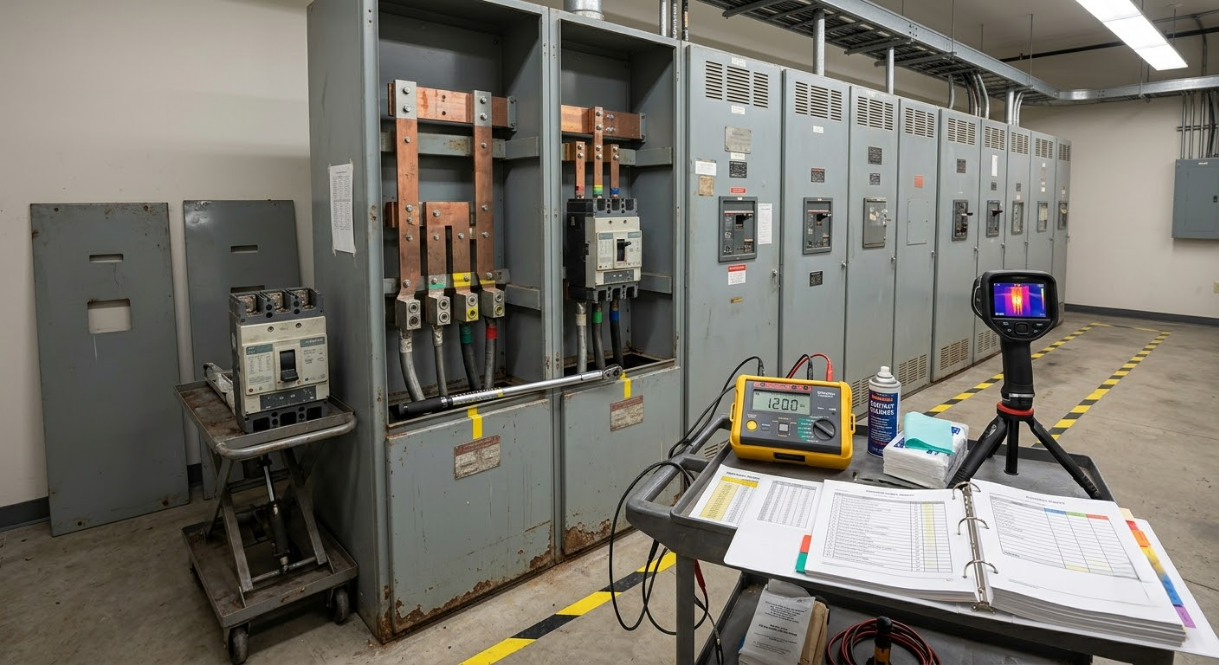
CONDITION REPORT
Switchgear Assessment and Testing
Infrared scanning under load, insulation resistance testing, torque verification, and a written condition report that tells you whether you are looking at maintenance, retrofit, or full replacement of the lineup.
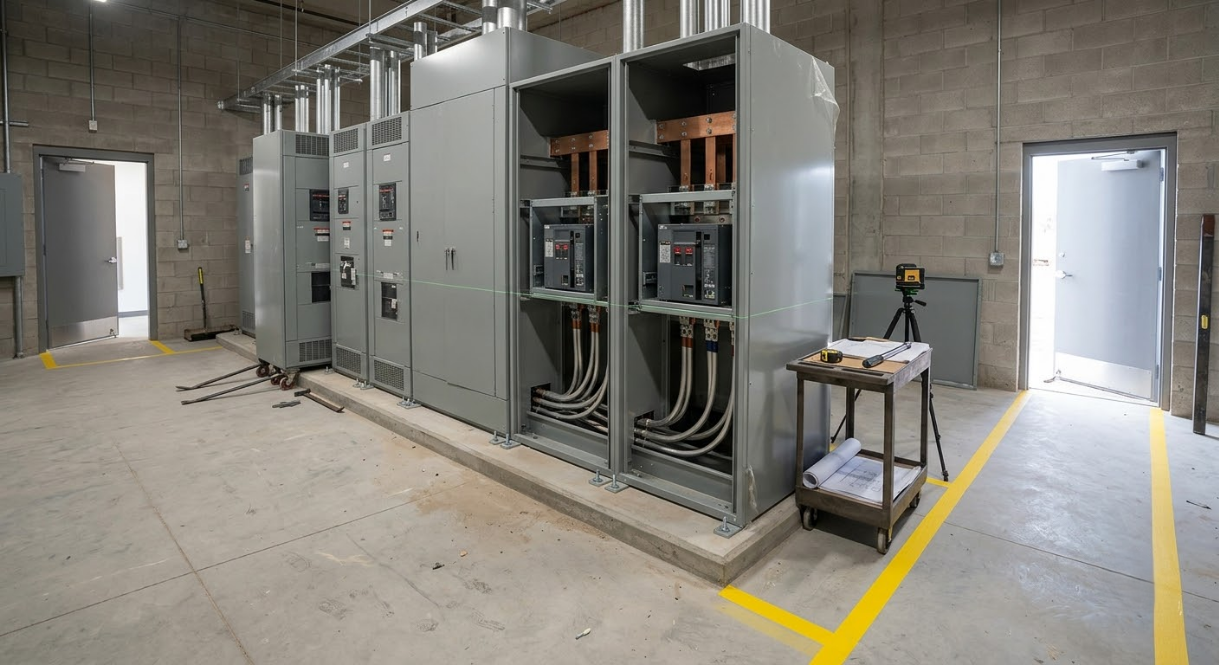
NEW LINEUPS
Switchgear and Switchboard Installation
Setting new metal-enclosed or metal-clad sections, landing feeders, anchoring and aligning each section, and confirming the working clearances and secondary egress that larger equipment triggers under the current electrical code.
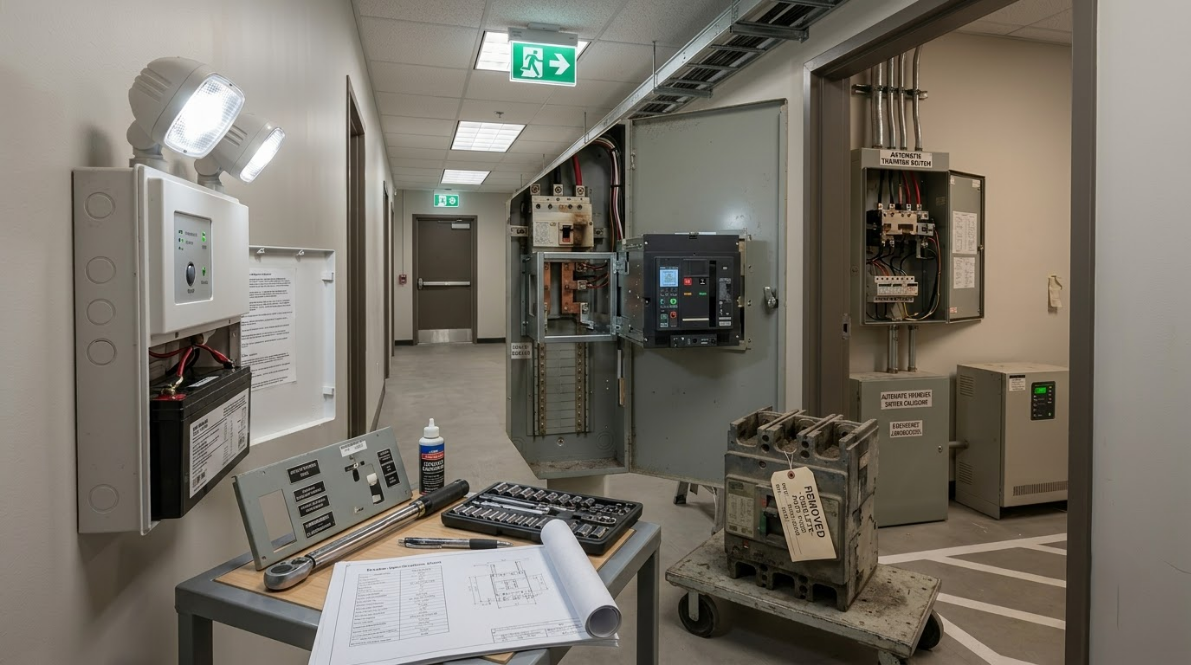
BREAKER RETROFIT
Retrofill and Component Replacement
Where the enclosure is sound but the breakers are obsolete, a retrofill puts modern trip units inside the existing structure. Far shorter lead time, far less demolition, same protection you needed.
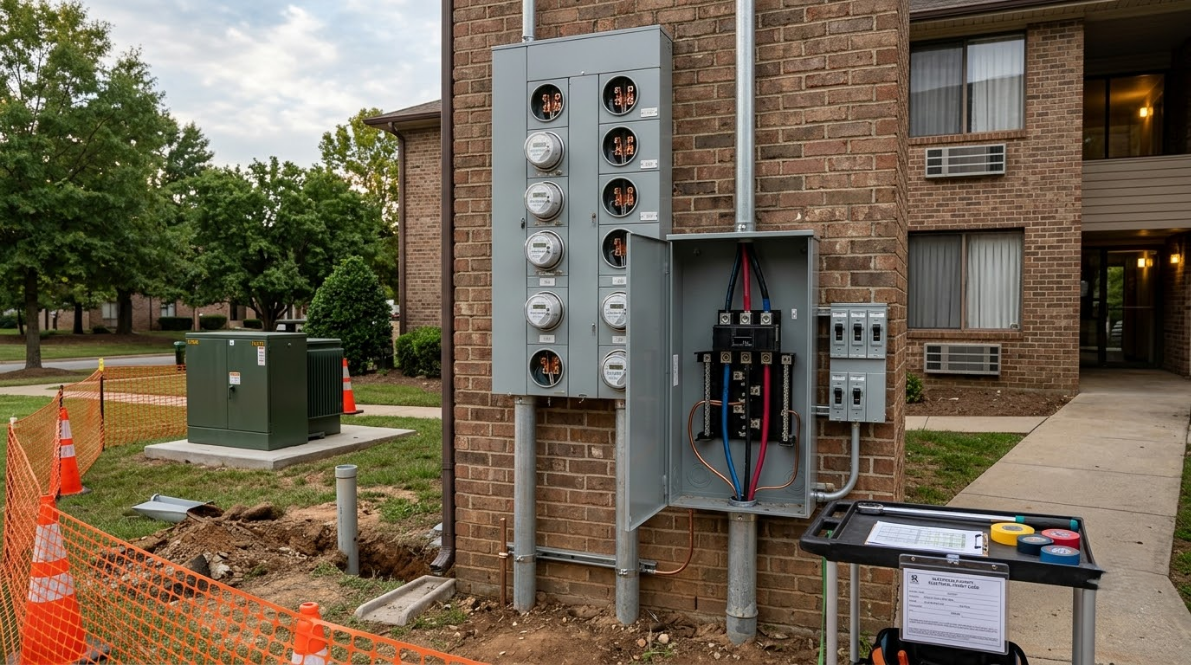
SERVICE ENTRANCE
Meter Stack and Main Disconnect Work
Multi-unit meter centers, main disconnects, and service repairs coordinated with the utility, including the 800 amp and 400-amp installations we have completed on occupied Georgia properties without extended outages.
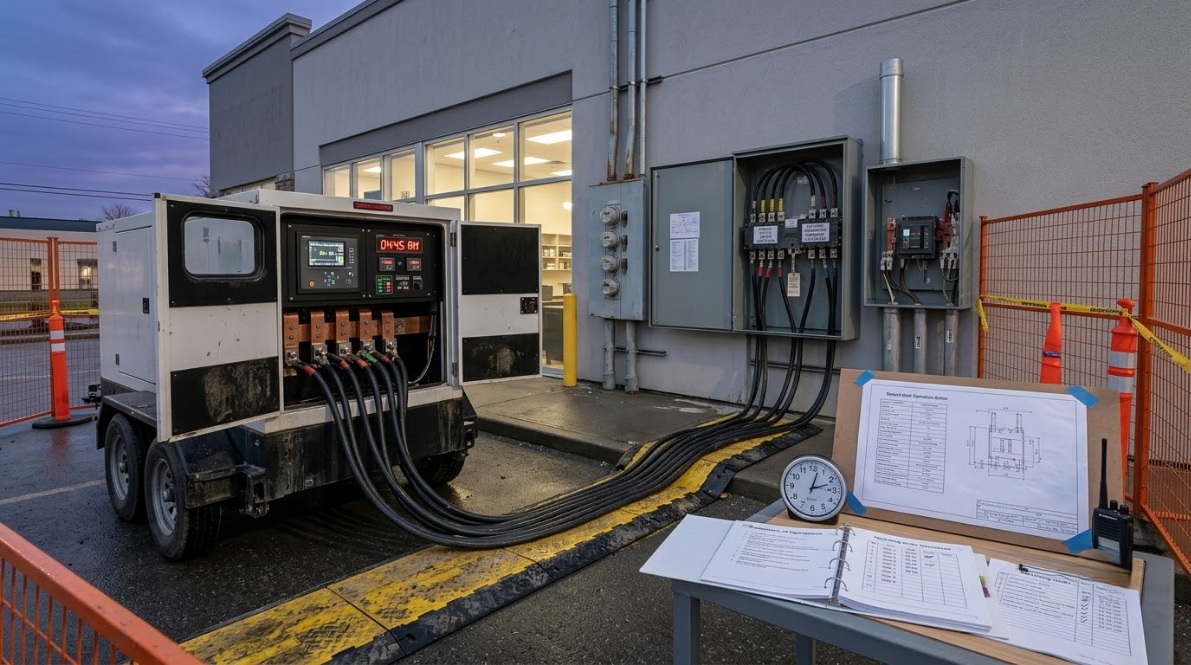
THE CUTOVER
Changeover Planning and Temporary Power
Building the sequence of operations, sizing and staging temporary feeds or generators, and executing the transfer inside the window your operation can actually absorb without losing a full day of trading.
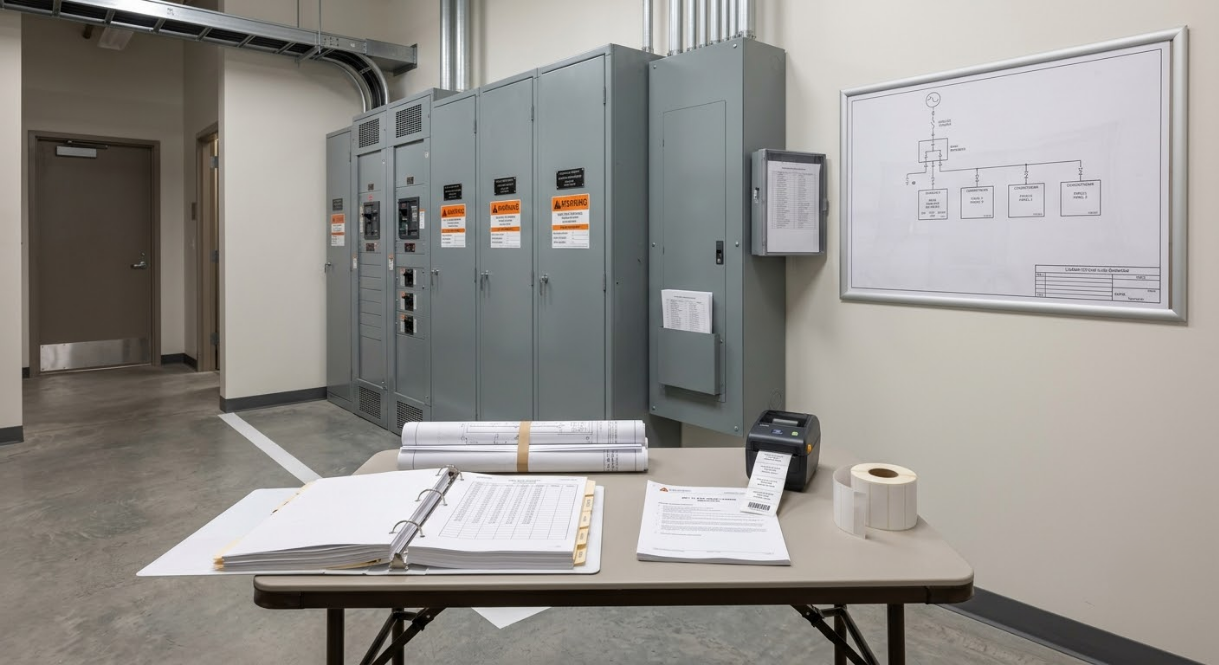
AFTER THE WORK
Labeling, Documentation, and Arc Flash Updates
Updated one-line diagrams, refreshed arc flash labels, revised panel schedules, and test records handed to your team, because a system change that nobody documented is a hazard waiting quietly in the room.
THE WORD ON OUR WORK
WHAT OUR CLIENTS SAY.
Owners hand us gear projects because the plan arrives before the crew does, and because we have never asked a tenant for an outage we did not genuinely need. Read what Georgia building owners and facility teams have said about their switchgear work.
Common Questions
FREQUENTLY ASKED QUESTIONS.
Switchgear decisions carry long lead times and real operational risk, so owners ask careful questions. These are the ones that come up in almost every early conversation.
What is the difference between switchgear and a switchboard?
Switchgear uses draw-out breakers in individually compartmented sections and is built for higher fault duties and easier maintenance. A switchboard is generally fixed-mounted, less expensive to install, and appropriate for smaller commercial services where the available fault current is lower.
What are the signs that switchgear needs upgrading?
Breakers that will not reset cleanly, discoloration or heat at bus connections, obsolete components with no parts supply, a lineup older than 30 years, or fault current that has risen past its interrupting rating after a utility change.
Should I repair, retrofit, or replace my switchgear?
Repair suits isolated component failure in otherwise healthy gear. Retrofit fits sound enclosures with obsolete breakers and cuts lead time dramatically. Replacement becomes the answer when ratings, capacity, or structural condition no longer serve the building at all.
How do you keep the building powered during a changeover?
Temporary feeds, staged transfers, and work scheduled into the window your operation can absorb. 5 Star Electrical LLC has completed meter and service changeovers on occupied buildings around Atlanta, GA without emptying them for a whole business day.
How often should switchgear be tested and maintained?
Annual infrared scanning under load is the minimum, with a fuller inspection including torque checks and insulation testing every 3 to 5 years. Equipment in dusty, humid, or heavily loaded environments deserves attention rather more often than that.
Does a switchgear upgrade require a new arc flash study?
Yes. A change to protective devices or available fault current alters incident energy, so labels based on the old study become wrong. 5 Star Electrical LLC updates documentation and labeling on every gear project in Atlanta, GA that we complete.
How long does a switchgear replacement take on site?
The physical work is usually days rather than weeks once the gear is on site. Procurement is the long part, with medium-voltage lineups quoted at 52 to 80 weeks depending on class, voltage, and the manufacturer's current backlog.
What is a retrofill, and when does it make sense?
A retrofill installs modern breakers and trip units inside an existing enclosure. It suits gear whose structure and bus remain sound but whose breakers are obsolete, and it typically arrives far sooner than a new lineup would.
HOW WE WORK
FROM ASSESSMENT TO ENERGIZED, HERE IS HOW.
STEP 01
Surveying the Existing Gear
We open the lineup, scan it under load, record nameplate data, check clearances, and compare the interrupting ratings against the fault current the utility can actually deliver at that service today.
STEP 02
Recommending a Path
You get a written comparison of maintenance, retrofit, and replacement with lead times attached to each. Nobody should choose a year-long procurement without seeing what the shorter options actually give up.
STEP 03
Procurement and Permits
Purchase orders go out early because lead time is the schedule. Meanwhile our office files the permit, coordinates with the utility, and confirms what the inspection agency wants to see on site.
STEP 04
Building the Cutover Plan
A written sequence of operations names every step, every isolation point, every temporary feed, and every person responsible. It gets circulated and agreed in writing before anyone touches a single breaker.
STEP 05
Installation and Transfer
Temporary power comes up, the old gear comes out, new sections are set, aligned, and terminated, and the transfer happens inside the agreed window rather than whenever the work happens to finish.
STEP 06
Testing, Labeling, and Handover
Insulation and functional testing, phase verification, updated arc flash labels, revised one-line diagrams, and a documentation package your facility team can hand to the next inspector without hunting for anything first.
GET YOUR FREE ESTIMATE
ASSESS YOUR DISTRIBUTION GEAR, FREE.
Send a photograph of the nameplate and your one-line diagram, and we will tell you honestly whether you are looking at maintenance, a retrofit, or a procurement conversation that should start now. Begin on our contact page.
WHAT YOUR ASSESSMENT COVERS:
✓ Infrared survey of the lineup under load
✓ Nameplate, rating, and fault current comparison
✓ Working clearance and code compliance review
✓ Maintenance, retrofit, and replacement options priced
✓ Realistic lead times for each path
✓ Cutover approach and downtime estimate