
Residential Electrical Repairs
RESIDENTIAL ELECTRICAL REPAIRS IN ATLANTA, GA
When part of a house goes dark and no breaker has tripped, the cause is almost always a failed connection: a backstabbed receptacle, a loose wire nut, or a switch terminal slowly loosening for years. Heat eventually opens that connection. 5 Star Electrical LLC traces faults like that for homeowners across Atlanta, Georgia, then repairs them under current code rules.

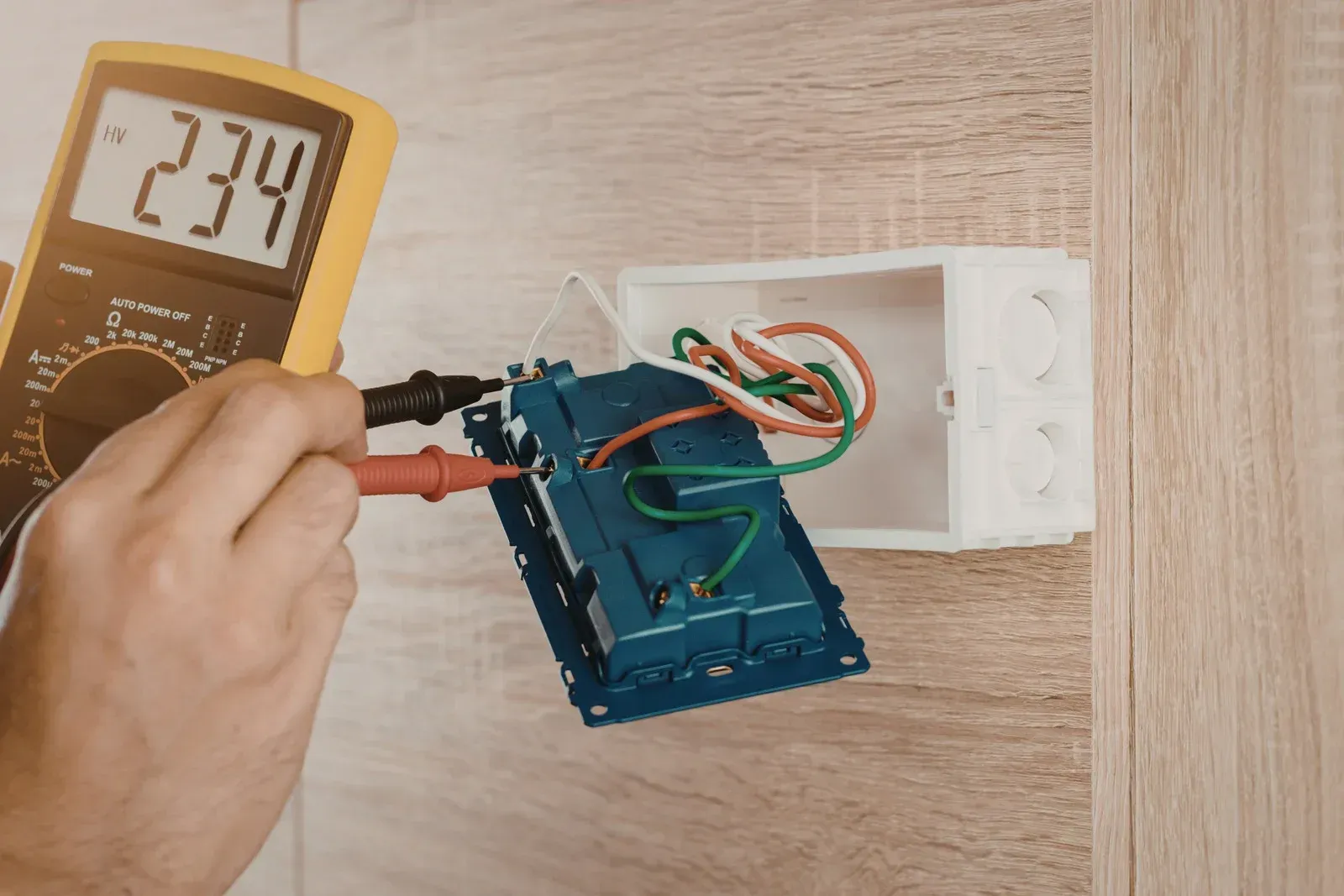
WE FIX THE CAUSE, NOT THE SYMPTOM.
Replacing a device that failed because of a problem upstream just moves the failure. The new receptacle will run warm too, and in 6 months somebody will be back. We look for why the connection failed, correct that, and then replace the part. It takes a little longer once and never has to happen twice.
We also tell you what we found rather than only what we did, because a homeowner who understands the fault can spot the next one early instead of living around it for years.
✓ Root cause identified before any part is replaced
✓ Repairs brought under current AFCI and GFCI rules
✓ Plain-language explanation of what we found
✓ 24/7 response for faults that cannot wait until morning
RESIDENTIAL ELECTRICAL REPAIRS
LITTLE ELECTRICAL PROBLEMS DO NOT STAY LITTLE.
A receptacle that only works when the plug is held at an angle. A switch that clicks twice before the light responds. A breaker that has needed resetting more often lately. Every one of those is a connection giving up slowly, generating heat each time current passes through it. Left alone they follow the same path, and the end of that path is scorched insulation inside a wall nobody was watching.
OLDER ATLANTA NEIGHBORHOODS SHARE THE SAME FAULTS.
Houses built here between the mid-1960s and the mid-1970s frequently carry aluminum branch circuits, and the Consumer Product Safety Commission reports that pre-1972 aluminum-wired homes were far more likely to reach fire hazard conditions at their connections. Older stock than that often has no equipment ground at all. Knowing which decade a street was built in tells us a great deal before we arrive.
SMALL CALLS TAUGHT US MORE THAN BIG ONES.
Anybody can install a new circuit in an empty wall. Finding out why one bedroom outlet died in a finished house without cutting drywall everywhere is a different skill, and it comes from repetition. Thousands of service calls across Georgia have taught our electricians where builders hide junction boxes, which shortcuts were common in which decade, and how to test a hypothesis before committing to a hole in your ceiling.
WHAT A PROPER REPAIR PUTS RIGHT
A FAULT THAT STAYS FIXED
Correcting the cause rather than the visible symptom means the circuit stops misbehaving permanently, and you stop scheduling the same repair every year with a different company.
A HOME THAT IS SAFER TONIGHT
Loose connections and overheating devices are the beginning of most residential electrical fires. Removing one is the kind of small job that quietly prevents an enormous one.
PROTECTION YOU DID NOT HAVE BEFORE
Modified or extended circuits pick up AFCI protection under current code, so a repair often leaves that part of the house better protected than it has ever been.
NO MORE WORKING AROUND IT
The lamp you stopped plugging in, the outlet nobody uses, the switch everyone knows to jiggle. Those small household rules disappear, and the house simply works the way it should.
HONEST INFORMATION ABOUT YOUR WIRING
A repair visit is also an inspection. You find out whether this was an isolated fault or the first visible symptom of something the whole house shares.
LESS DAMAGE TO YOUR FINISHES
Testing before cutting means fewer holes, and the holes we do make land where they can be patched easily rather than in the middle of a feature wall.
Insert Title

Insert Title
Lorem ipsum dolor sit amet, consectetur adipiscing elit. Sed do eiusmod tempor incididunt ut labore et dolore magna aliqua. Ut enim ad minim veniam, quis nostrud exercitation ullamco laboris nisi ut aliquip ex ea commodo consequat.
WHAT WE REPAIR
OUR RESIDENTIAL REPAIR WORK
Most repair calls fall into a handful of families, though the same symptom can have several causes. These are the faults our electricians are called out to most often around Metro Atlanta.
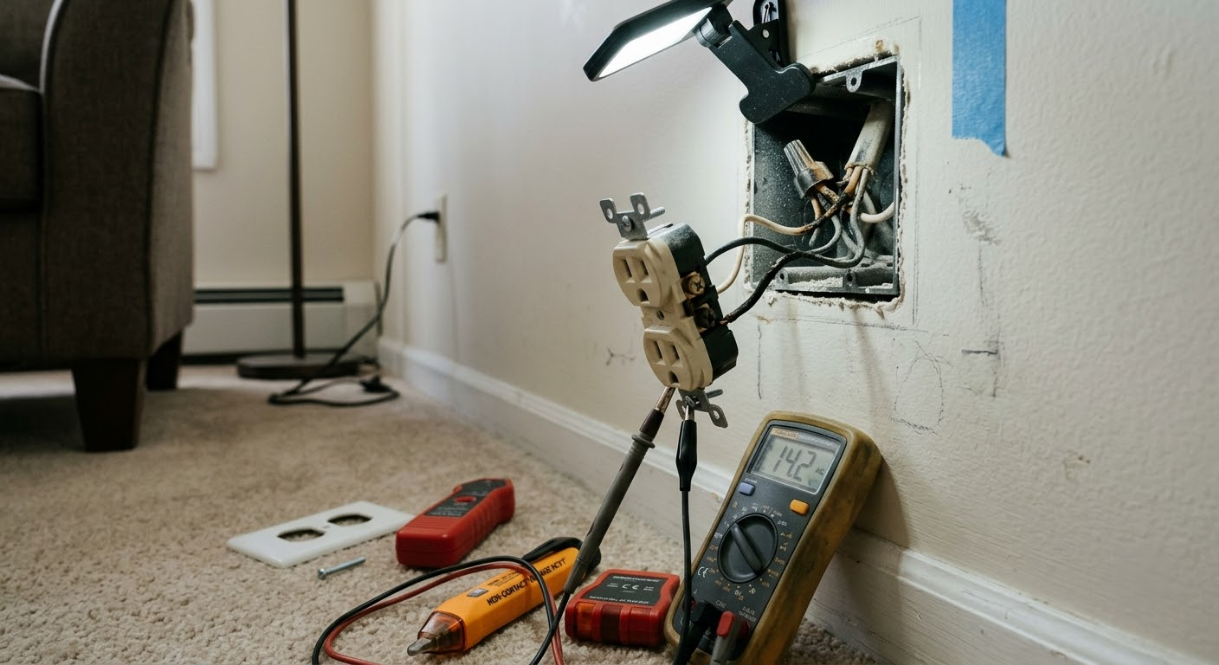
NO POWER
Dead Outlet and Circuit Diagnosis
Tracing a circuit that has stopped carrying, whether the break sits at a backstabbed receptacle, a buried splice, a tripped device further upstream, or a conductor damaged by a picture hook.
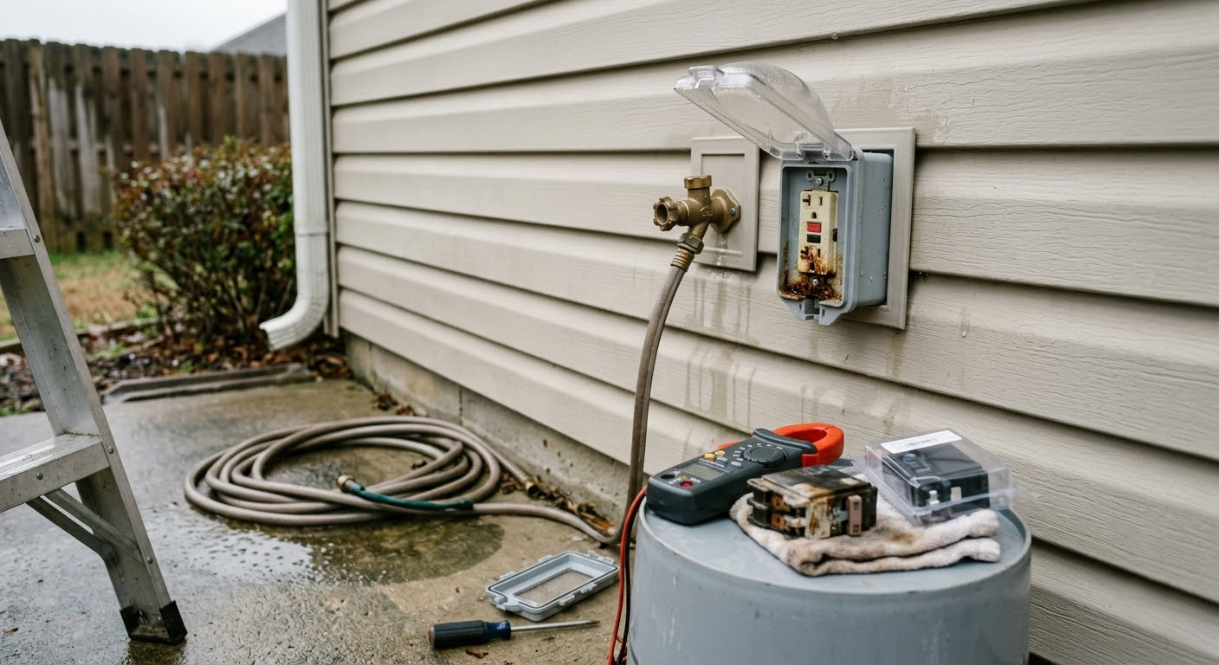
KEEPS TRIPPING
Breaker and GFCI Fault Repair
Finding whether the circuit is genuinely overloaded, a device is leaking to ground, moisture has reached an exterior receptacle, or the breaker itself has simply worn out from repeated operation.
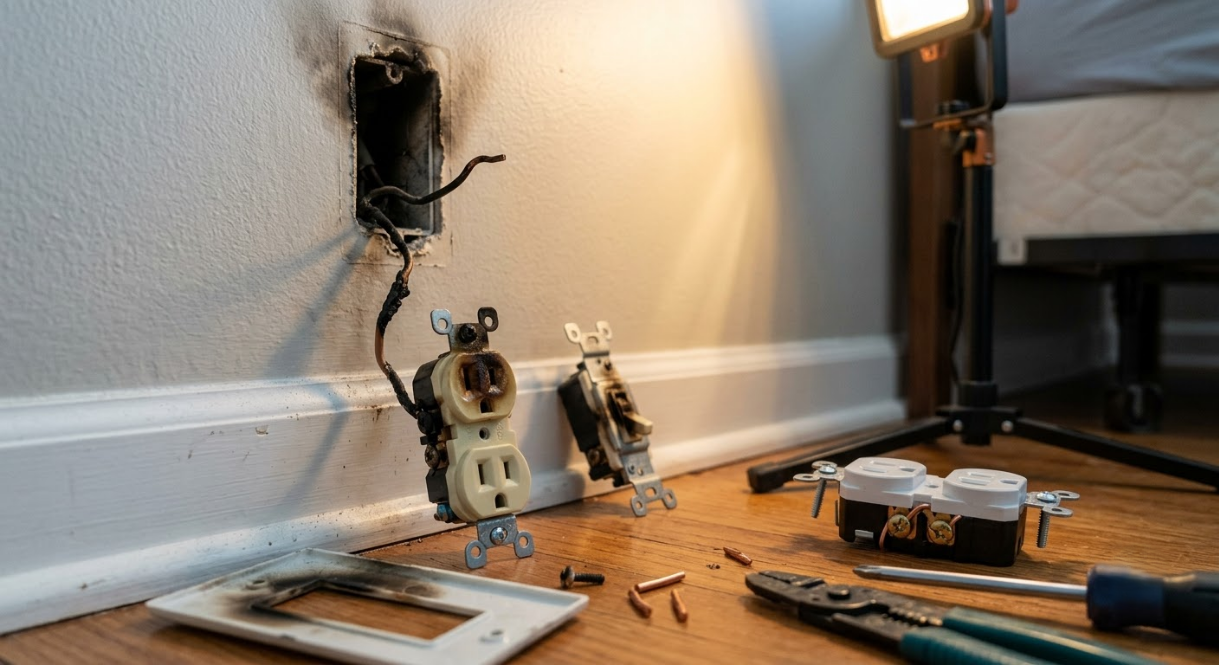
RUNNING HOT
Overheated Device and Connection Repair
Replacing scorched receptacles and switches, re-terminating loose conductors properly, and checking the rest of the circuit for the same failure, because heat damage rarely occurs in one place only in a house.
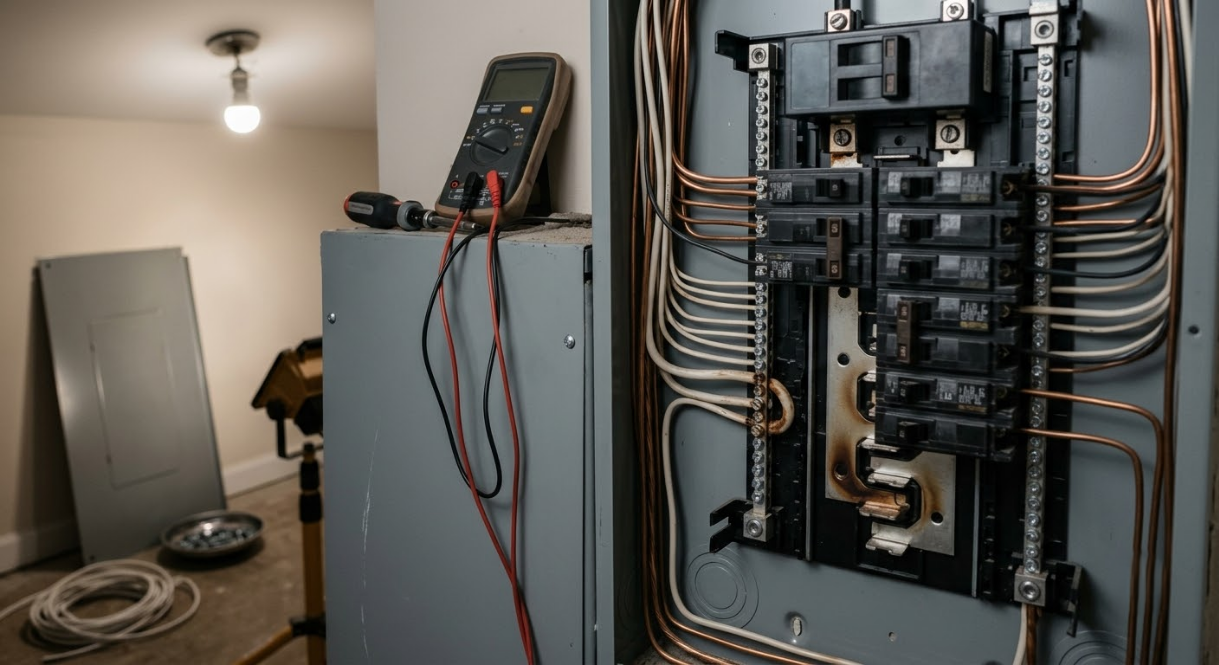
FLICKER AND DIM
Loose Neutral and Voltage Fault Repair
Locating an open or shared neutral, correcting connections at the panel and along the run, and confirming voltage sits where it should before we call the problem solved. This one is worth taking seriously.
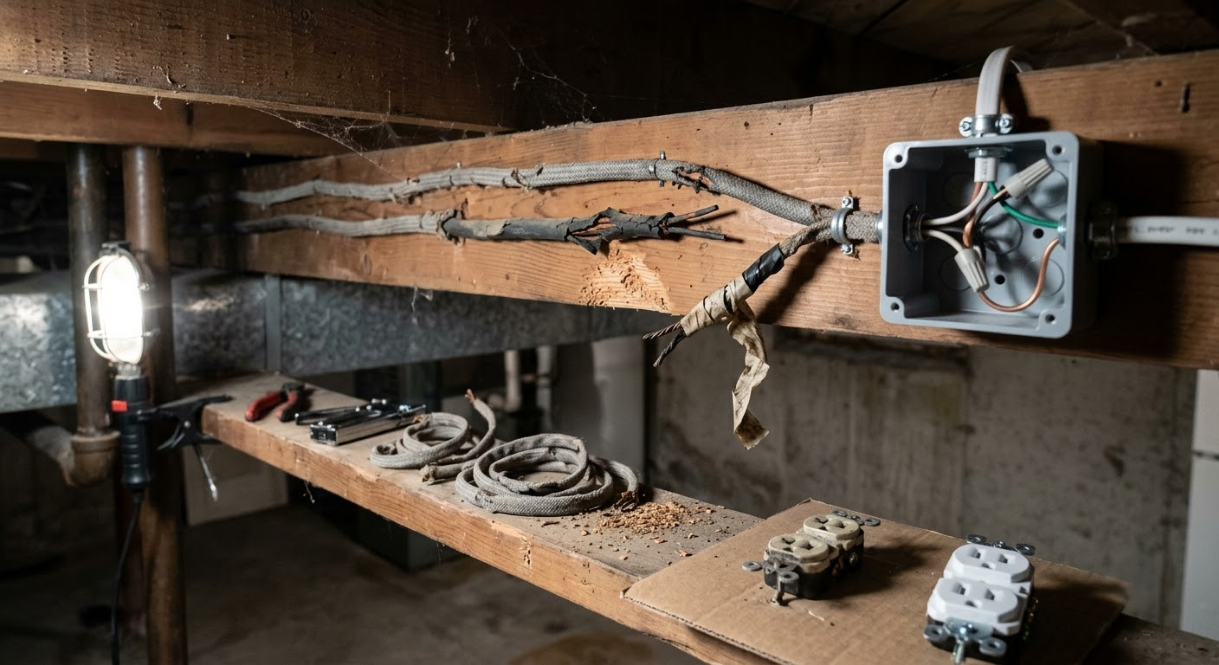
OLD WIRING
Damaged and Deteriorated Wiring Repair
Replacing brittle insulation, rodent-damaged cable, improper splices left outside a box, and ungrounded receptacles corrected the way the code actually allows rather than with a three-prong face and hope.
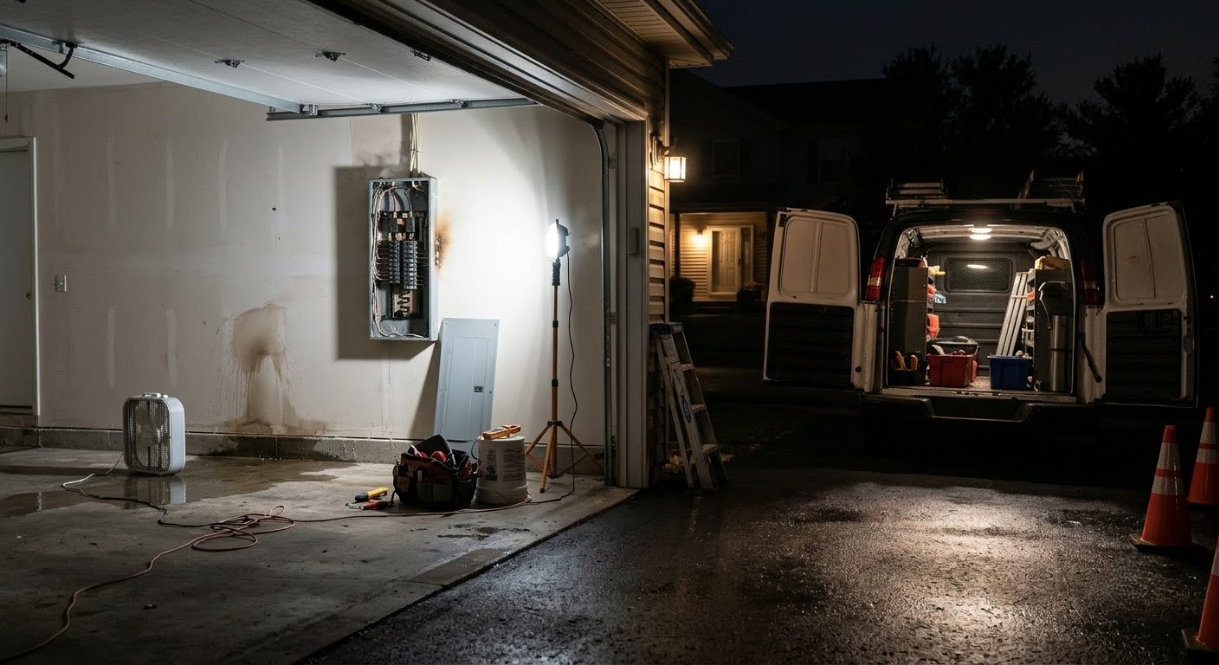
WHEN IT CANNOT WAIT
Emergency Electrical Repairs
Burning smells, sparking devices, water reaching electrical equipment, or a panel too hot to touch. We respond around the clock, because none of those improve by waiting until Monday morning.
THE WORD ON OUR WORK
WHAT OUR CLIENTS SAY.
Repair calls are how most families meet us, and a fair number stay for everything afterward. Read what homeowners around Georgia have said about getting a straight explanation, a tidy repair, and a house that finally stopped misbehaving at them.
Common Questions
FREQUENTLY ASKED QUESTIONS.
Most of these get asked at the front door while we are still putting the tool bag down. Short answers here, and the specifics come from looking at your circuit.
Why is part of my house without power when no breaker has tripped?
Almost always a failed connection rather than a failed breaker. A backstabbed receptacle, a loose wire nut, or a burned switch terminal breaks the circuit downstream of the panel, which is why the breaker never notices anything at all.
Is it safe to reset a tripped breaker myself?
Once, yes, if nothing smells hot and nothing looks damaged. If it trips again immediately, leave it off. Repeated resetting against a real fault damages the breaker and removes the protection you are quietly relying on it to provide.
Why does my GFCI outlet keep tripping?
Either it is doing its job against real leakage, or it has aged out. Moisture in exterior boxes, a failing appliance, and long circuit runs are the usual culprits. Devices older than 10 years often simply fail on their own.
Can I change a two-prong outlet to a three-prong one?
Not by swapping the face. Code allows three routes: another non-grounding device, a GFCI marked no equipment ground, or a grounded device fed from a GFCI and labeled accordingly. Running a real ground is the better fix where possible.
Why is my outlet or switch plate warm to the touch?
Resistance at a connection turns current into heat. It usually means a loose termination or a failing device, and it does not resolve itself. 5 Star Electrical LLC treats those calls as urgent across Atlanta, GA rather than routine.
Why do my lights flicker in one room only?
A shared or loose neutral on that circuit, a failing dimmer, or an LED and dimmer combination that were never compatible. Flicker confined to one room usually points at a connection within that circuit rather than the supply.
Does aluminum wiring have to be replaced?
Not necessarily. The Consumer Product Safety Commission accepts full copper replacement or approved crimp connectors at every termination as remedies. 5 Star Electrical LLC assesses which route suits the house for homeowners around Atlanta, GA before quoting anything.
Should a faulty breaker be repaired or replaced?
Replaced. Breakers are sealed devices with a mechanical life, and a unit that has tripped repeatedly or feels loose in the panel has done its work. Replacement is inexpensive relative to everything it protects downstream.
HOW WE WORK
FROM SYMPTOM TO SORTED, HERE IS HOW.
STEP 01
Hearing the Whole Story
When it started, what else was happening, whether anything was installed recently, and what makes it better or worse. Homeowners usually know more useful detail than they think they do. We listen before we open anything.
STEP 02
Testing Before Cutting
Circuit tracers, meters, and a receptacle tester narrow the fault down to a section of the run before any drywall is touched. Fewer holes is a design goal, not a happy accident.
STEP 03
Finding the Actual Fault
The suspect box gets opened, the connection gets examined, and we confirm the cause rather than assuming it. If the evidence points elsewhere, we follow it instead of forcing our first theory to fit.
STEP 04
Explaining Before Repairing
You see what we found and hear what the options are, including what happens if you leave part of it for later. Nobody should approve work they do not understand. That includes the price.
STEP 05
Making the Repair Properly
Connections re-terminated to specification, damaged conductors replaced rather than taped, devices swapped for current listed equipment, and any modified circuit brought under the AFCI and GFCI rules that apply now. Then it gets tested.
STEP 06
Testing and Tidying Up
The circuit is tested under load, covers go back on, the work area is cleaned, and you get told plainly what we found and whether anything else deserves attention soon. No vague warnings, just specifics.
Get Your Free Estimate
GET YOUR REPAIR QUOTED, FREE.
Tell us what the circuit is doing, when it started, and which room it affects. We will give you a straight answer about what it likely needs and what the visit costs. Start on our contact page.
WHAT YOUR REPAIR VISIT COVERS:
✓ Full diagnosis before any part is replaced
✓ Testing that limits holes in your finishes
✓ Plain explanation of the cause and the options
✓ Repairs made to current code, not simply restored
✓ Circuit tested under load before we leave
✓ Work area cleaned and covers back on