
Home Electrical Rewiring
WHOLE-HOME ELECTRICAL REWIRING IN ATLANTA, GA
A full rewire typically runs 3 to 10 days, and houses past 40 years old rarely finish in under 7, bringing every branch circuit under current AFCI and tamper-resistant rules. 5 Star Electrical LLC rewires older homes across Atlanta, Georgia and nearby Dunwoody, replacing knob-and-tube and aluminum branch wiring room by room. Insurers ask about both before writing a policy.
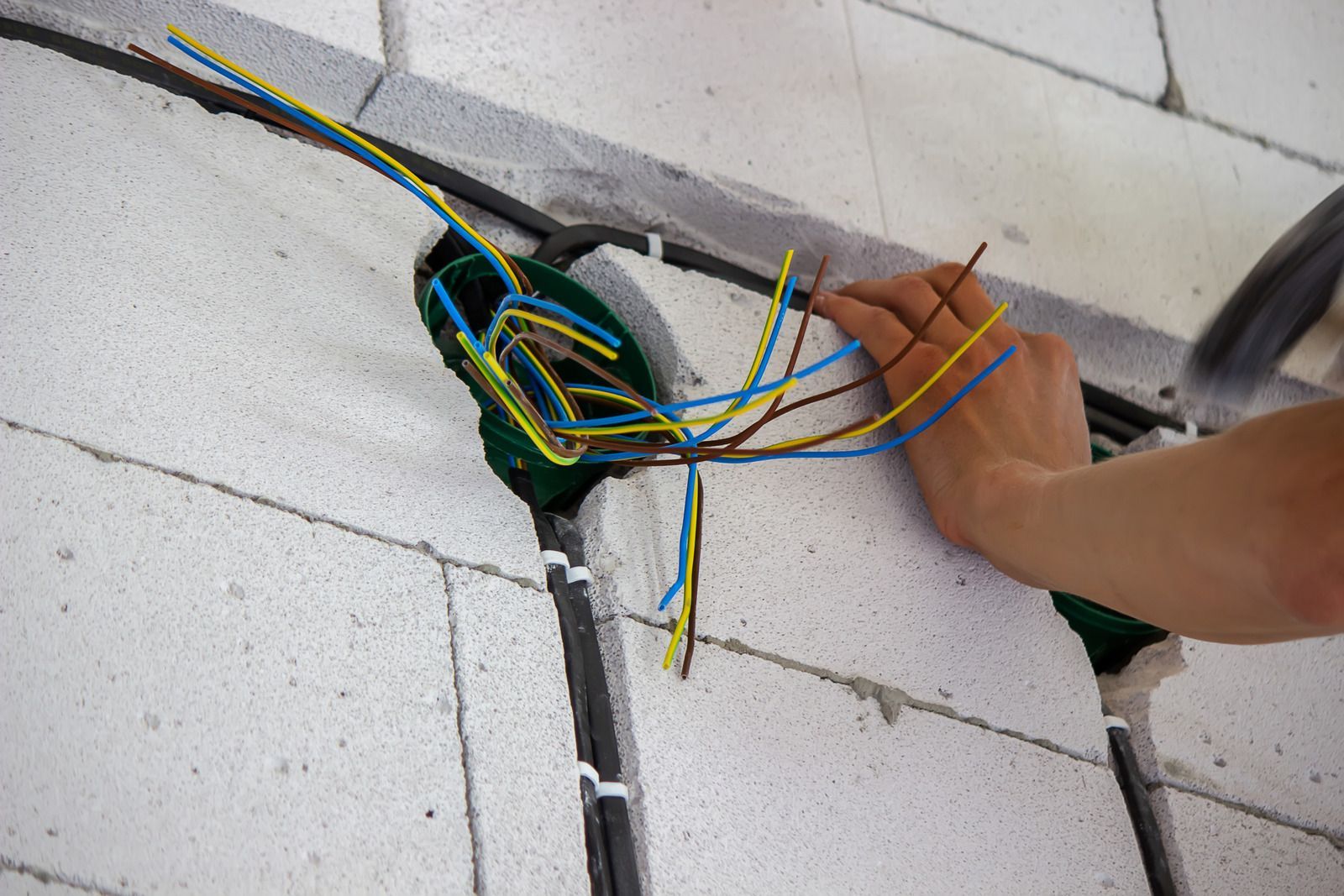

A REWIRE IS DISRUPTIVE ONCE AND QUIET FOREVER.
Nobody enjoys a week of open walls and dust sheets. What makes it worth doing is that the house then stops being a source of quiet worry: no more speculating about what is behind the plaster, no more insurance questions, no more circuits that only half work. One inconvenient week buys several decades of not thinking about it.
We work in a defined sequence, keep the rooms you actually need live for as long as possible, and clean at the end of each day rather than at the end of the project.
✓ Work phased so most families stay in the house
✓ Drywall opened only where the route requires it
✓ Every run photographed before walls close
✓ Permits, inspections, and code upgrades included
WHOLE-HOME ELECTRICAL REWIRING
WIRING HAS A LIFESPAN. MOST PEOPLE NEVER HEAR ABOUT IT.
Copper conductors last a very long time. Insulation, terminations, and the assumptions a house was built around do not. Knob-and-tube has no equipment ground and was never designed for a home with a dozen chargers in it. Aluminum branch circuits creep and oxidize at every screw. Rubber and cloth insulation goes brittle and falls away when disturbed. None of that announces itself until somebody opens a box.
INSURERS ASK ABOUT WIRING BEFORE THEY ASK ANYTHING ELSE.
Knob-and-tube and aluminum branch circuits regularly trigger higher premiums, conditions on a policy, or a refusal to write one at all, and carriers increasingly ask at renewal rather than only at purchase. For owners of older Metro Atlanta homes that turns rewiring from a someday project into a scheduling question. A documented, permitted rewire answers the underwriter and the home inspector in the same stroke.
KNOB-AND-TUBE STOPPED SURPRISING US YEARS AGO.
Every old house hides its wiring differently. Runs buried under three generations of insulation, junctions with no box at all, a 1950s addition spliced into 1920s conductors, circuits that cross floors for no reason anybody living can explain. Our crews have worked through enough Georgia houses of that age to plan routes that respect plaster, trim, and hardwood, and to price a rewire from what we found rather than from optimism.
WHAT A FULL REWIRE LEAVES BEHIND
A HOUSE THAT MEETS TODAY'S RULES
Grounded circuits, AFCI and GFCI protection where the code requires it, tamper-resistant receptacles, and outlets spaced so no wall point sits more than 6 feet from one.
THE END OF EXTENSION CORDS
Enough properly placed receptacles means the cords under rugs and behind furniture disappear, and with them one of the most common causes of household electrical fires.
INSURANCE WITHOUT CONDITIONS
A documented rewire removes the question carriers ask about older homes, which often removes the loading or the exclusion that came attached to the last renewal.
CAPACITY FOR HOW YOU ACTUALLY LIVE
Dedicated circuits for the kitchen, the laundry, the home office, and the garage mean appliances stop competing and breakers stop deciding what runs at once.
VALUE A BUYER WILL PAY FOR
Old wiring is one of the first things flagged in a home inspection and one of the largest items negotiated on. A completed rewire takes it off the table entirely.
AN END TO THE QUIET WORRY
Not wondering what is behind the plaster is worth more than most homeowners expect. The house stops being a thing you manage and goes back to being somewhere you live.
Insert Title

Insert Title
Lorem ipsum dolor sit amet, consectetur adipiscing elit. Sed do eiusmod tempor incididunt ut labore et dolore magna aliqua. Ut enim ad minim veniam, quis nostrud exercitation ullamco laboris nisi ut aliquip ex ea commodo consequat.
WHAT WE REWIRE
OUR WHOLE-HOME REWIRING WORK
A rewire is several jobs happening in sequence rather than one long task. These are the scopes included when we take on a full or partial rewire around Metro Atlanta. Partial rewires are common too.
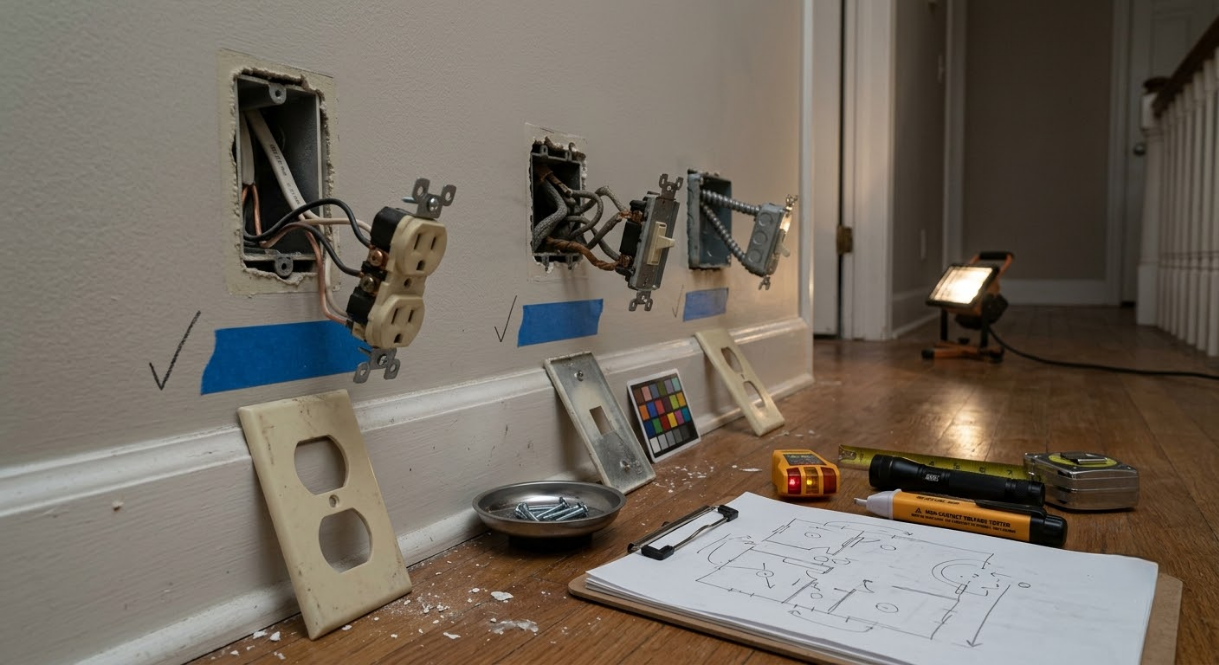
WHAT IS THERE
Whole-House Wiring Survey
Opening representative boxes, identifying wiring types and vintages, checking grounding, and mapping what actually exists so the quote reflects the house rather than an average of similar houses on the street.
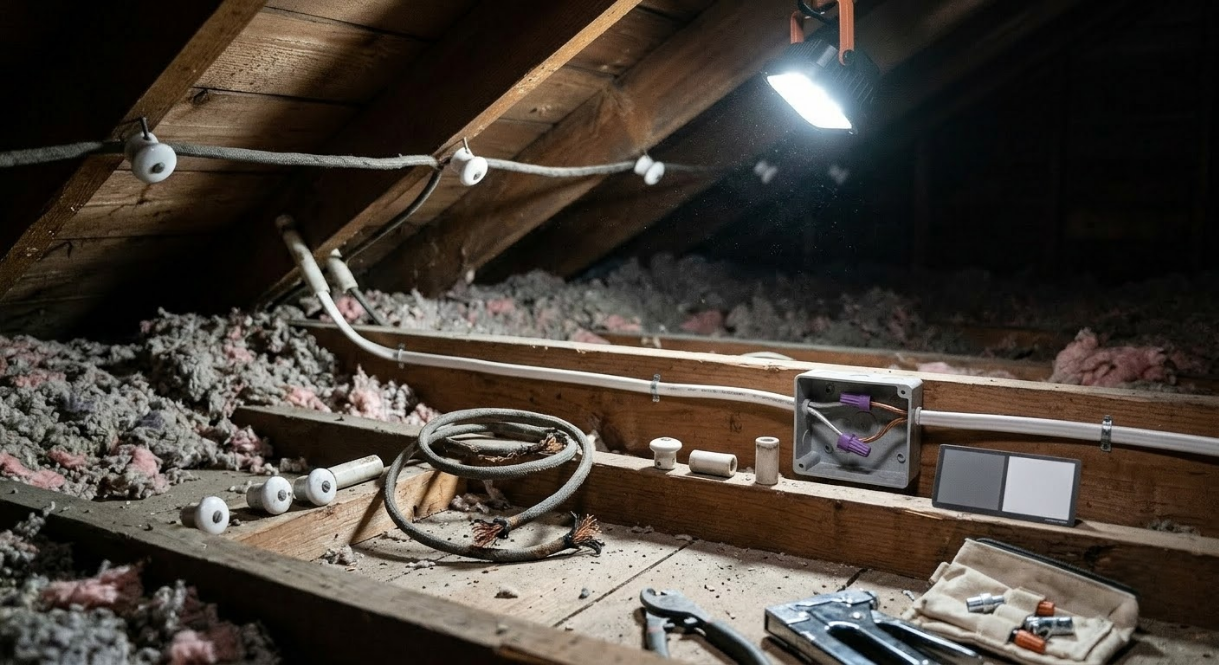
OUT WITH THE OLD
Knob-and-Tube and Aluminum Removal
Taking out ungrounded knob-and-tube runs and replacing aluminum branch circuits with copper, or terminating them with the approved connectors the Consumer Product Safety Commission recognizes as a remedy. Both routes get documented.
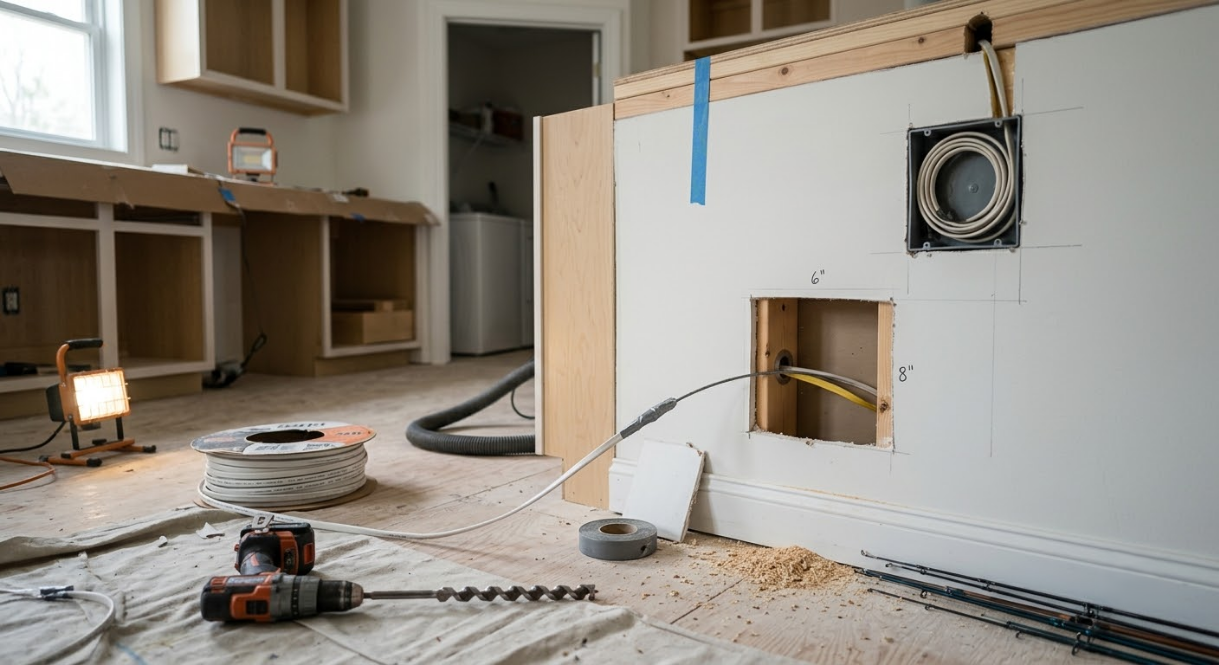
NEW ROUTES
Branch Circuit and Homerun Installation
Fishing new cable through walls, floors, and attics along routes chosen to minimize damage, with dedicated circuits added for kitchens, laundry, and anything else that deserves its own breaker entirely.
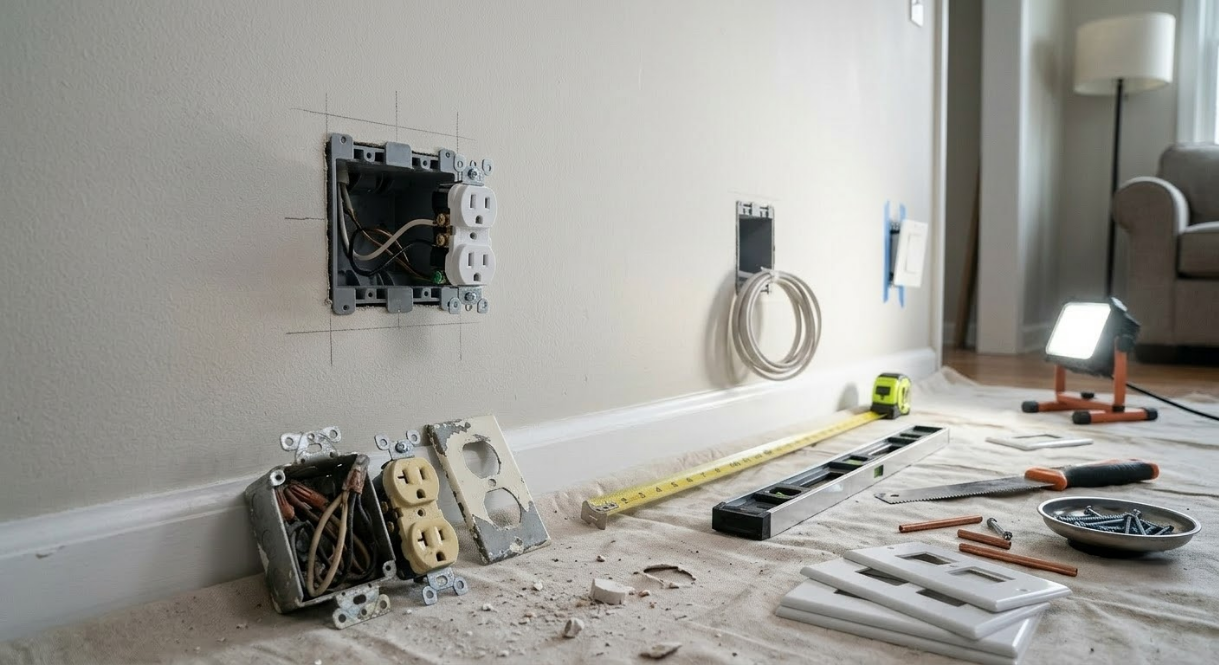
DEVICES AND BOXES
Receptacle, Switch, and Box Replacement
New boxes sized correctly, tamper-resistant receptacles, current switches, and outlet spacing that meets the 6-foot rule so furniture placement stops dictating where lamps can go. Old boxes rarely have room.
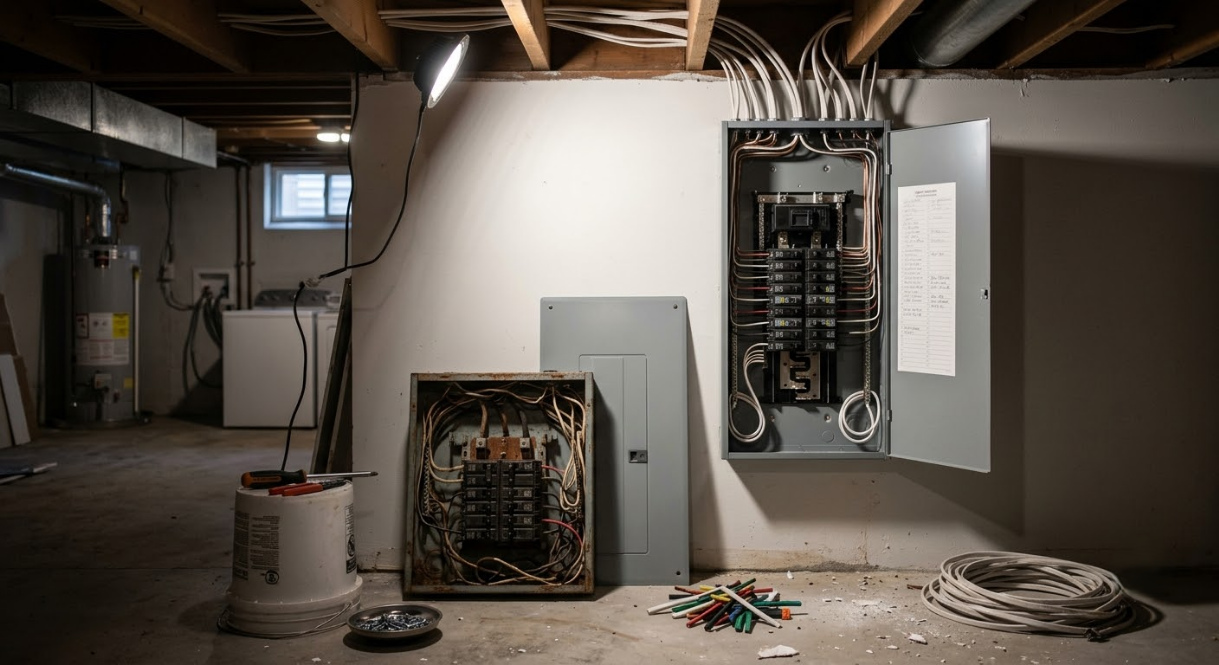
THE NEW HEART
Panel Replacement and Circuit Reorganization
Most rewires include a new panel, since old circuits rarely map onto a modern layout. Everything lands on labeled breakers with the AFCI and GFCI protection the code now requires.
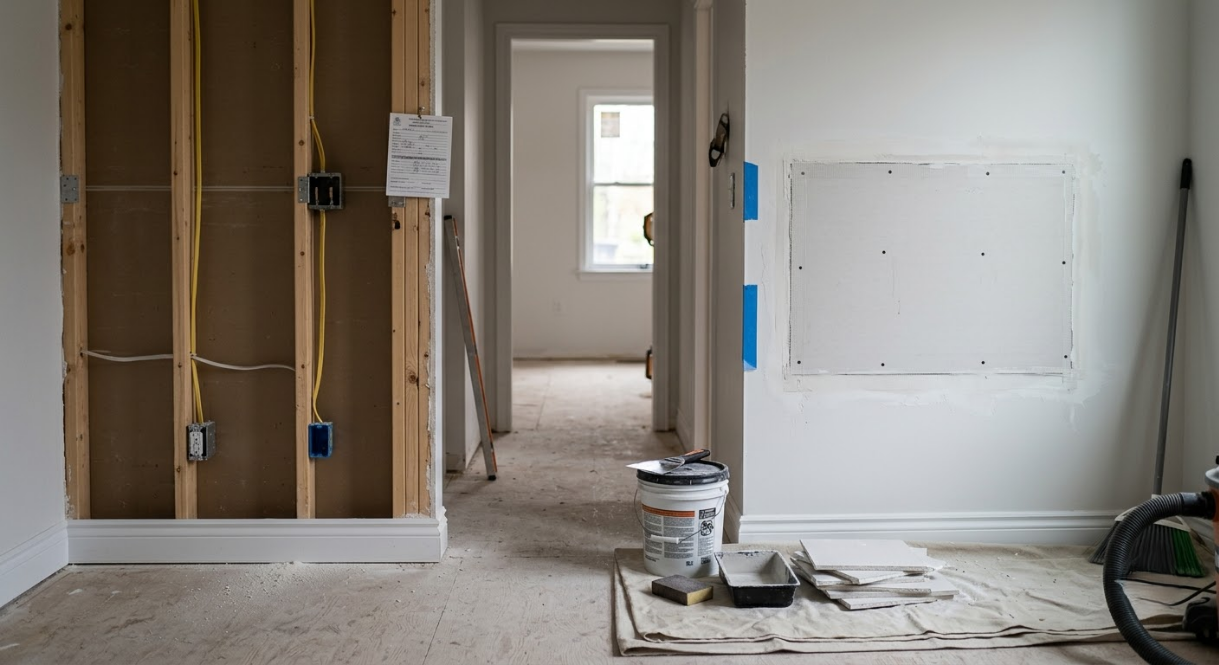
PUTTING IT BACK
Inspection and Patch Coordination
Rough and final inspections scheduled by our office, and drywall repair coordinated so the finishing trades arrive when the walls are genuinely ready rather than a week too early for it.
THE WORD ON OUR WORK
WHAT OUR CLIENTS SAY.
Rewiring is the biggest electrical decision most homeowners make, and it runs on trust more than anything else. Read what Georgia families have said about living through the work, the daily cleanup, and the house they got back at the end.
THE WORD ON OUR WORK
WHAT OUR CLIENTS SAY.
Rewiring is the biggest electrical decision most homeowners make, and it runs on trust more than anything else. Read what Georgia families have said about living through the work, the daily cleanup, and the house they got back at the end.
Common Questions
FREQUENTLY ASKED QUESTIONS.
Rewiring raises practical questions about disruption more than about wiring itself. These are the ones homeowners ask before deciding whether this is the year to do it.
How long does it take to rewire a house?
Typically 3 to 10 days depending on size, access, and finishes, with homes over 40 years old rarely finishing in under 7. Plaster walls, limited attic access, and occupied rooms all extend the schedule by a day or two.
Can I stay in my home while it is being rewired?
Most families do. We phase the work so bedrooms and a bathroom stay live, cut power only to the area being worked on, and clean each evening. Expect some dust and expect to move furniture around fairly regularly.
Does rewiring mean removing all the drywall?
No. Most runs go through attics, basements, and crawl spaces, with small access holes cut where a route needs them. Plaster and finished ceilings on middle floors are where openings become unavoidable. We agree the locations with you first.
What are the signs a house needs rewiring?
Two-prong outlets, a fuse box, cloth or rubber insulation, frequent tripping, warm devices, and any knob-and-tube or aluminum branch wiring. 5 Star Electrical LLC surveys older homes across Atlanta, GA before recommending a full rewire rather than a partial one.
Is a panel upgrade included in a rewire?
Almost always, because old circuits rarely fit a modern panel layout and the new protection requirements need modern breakers. 5 Star Electrical LLC prices both together for homes around Atlanta, GA so there are no later surprises for you.
Who repairs the drywall and paint afterward?
We coordinate patching, and many homeowners use their own decorator for the finish. Either way the scope should be agreed in writing before work starts, so nobody discovers a gap between the two trades. That gap is where complaints live.
How often does a house need rewiring?
Wiring is not on a fixed replacement cycle. Modern cable installed properly can last 50 years or more, while knob-and-tube and early aluminum are effectively at end of life regardless of how they happen to look. Condition beats age here.
Can a partial rewire make sense instead?
Often, yes. Where only certain circuits are original, replacing those and leaving sound modern cable in place is reasonable and much less disruptive. The survey tells us which situation the house is in. Half of the homes we see qualify.
HOW WE WORK
FROM OLD CIRCUITS TO A NEW SYSTEM, HERE IS HOW.
STEP 01
Surveying the House
We open boxes in several rooms, identify wiring types, check the panel and grounding, and look at attic and crawl space access. That survey decides whether a full or partial rewire makes sense.
STEP 02
Planning Routes and Circuits
Before pricing we plan where cable can travel with least damage and what the new circuit layout should be, including dedicated circuits for the way your household actually uses the rooms today.
STEP 03
Quote, Permit, and Schedule
You receive a written scope naming rooms, circuits, devices, patching responsibility, and the phasing plan. Our office files the permit and books inspections around the schedule we agreed with you beforehand.
STEP 04
Rewiring Room by Room
Access holes go in, old cable comes out, new runs are pulled and secured, and boxes are set. We keep unaffected areas live so the household keeps functioning while we work. Evenings are yours again.
STEP 05
Rough Inspection and Closing Up
Everything is photographed, the rough inspection is called, and walls close only after sign-off. Patching then follows, either by our coordinated trade or by the decorator you prefer to use yourself.
STEP 06
Devices, Final Inspection, and Handover
Receptacles, switches, and fixtures are trimmed out, the new panel is labeled from tested circuits, the final inspection passes, and you get the documentation your insurer will eventually ask for. Keep it somewhere safe.
GET YOUR FREE ESTIMATE
FIND OUT WHAT YOUR HOUSE ACTUALLY NEEDS, FREE.
Tell us the age of the house and what you have noticed, and we will survey before recommending anything. Plenty of homes need a partial rewire rather than a full one, and you deserve that answer. Start on our contact page.
WHAT YOUR REWIRE SURVEY COVERS:
✓ Wiring types and vintages identified room by room
✓ Panel, grounding, and bonding condition checked
✓ Full versus partial rewire options compared
✓ Route planning that limits damage to finishes
✓ Phasing plan so you can stay in the house
✓ Permit, inspection, and patching responsibilities agreed