
COMMERCIAL LIGHTING & LED RETROFITS
COMMERCIAL LIGHTING & LED RETROFITS IN ATLANTA, GA
A 400 watt metal halide fixture makes 20,000 lumens at 50 lumens per watt; a 150 watt LED matches it at 133 and lasts past 100,000 hours. Documented retrofits cut lighting energy 50% to 90%. 5 Star Electrical LLC retrofits lighting for warehouses, offices, and retail across Atlanta, Georgia, covering fixtures, occupancy controls, egress compliance, and the utility rebate paperwork.
BETTER LIGHT, LOWER BILL, SAME BUILDING.
Lighting is the rare upgrade that pays for itself while making the space demonstrably better to work in. A 24-hour manufacturing floor often sees payback inside 1.2 to 2 years, a distribution center 2 to 3, an office 3.5 to 5. The lighting quality improvement arrives on day one regardless. Nobody has ever asked us to put the old fixtures back.
We model the numbers against your actual operating hours and utility rate rather than a manufacturer's brochure, because a payback figure that assumes 3 shifts is useless to a business running one.
✓ Payback modeled on your hours and utility rate
✓ DLC-listed fixtures selected for rebate eligibility
✓ Occupancy, daylight, and dimming controls installed
✓ Emergency and egress lighting verified after every retrofit
COMMERCIAL LIGHTING & LED RETROFITS
YOUR LIGHTING BILL IS A CHOICE, NOT A FIXED COST.
Most commercial buildings are still paying for technology that was current 20 years ago. Metal halide taking 15 minutes to restrike, fluorescent tubes dimming steadily toward the end of their life, and ballasts failing one by one on a maintenance ticket nobody enjoys writing. Replacing them is not a luxury project. It is the fastest reduction in operating cost available to most Metro Atlanta buildings, and it improves the space at the same time.
GEORGIA'S ENERGY CODE HAS OPINIONS ABOUT CONTROLS.
A retrofit is not only a fixture swap. Georgia's commercial energy code governs interior lighting power density and the controls a space must have, so occupancy sensing, daylight response, and zoning are part of the compliance picture rather than optional extras. We design the control layer alongside the fixtures, which is also where a surprising share of the savings actually comes from.
8+ YEARS OF SWAPPING FIXTURES NOBODY MISSES.
High bays 30 feet up over racking that cannot move. Troffers in a ceiling grid the landlord will not let us damage. Parking lot poles that need a lift and a permit. Retrofits are rarely difficult electrically and frequently difficult logistically, and the second part is what separates a smooth project from a disruptive one. We plan access, staging, and disposal before the first fixture comes down.
WHAT AN LED RETROFIT RETURNS
AN ENERGY BILL THAT DROPS IMMEDIATELY
Lighting energy reductions of 50% to 90% are documented across hundreds of facilities, and the saving starts the month the fixtures are energized rather than after a payback period.
LESS WORK FOR YOUR HVAC
Every watt of lighting removed takes roughly 3 to 4 BTU of cooling load with it, which can add 20% to 40% to the return beyond the lighting saving itself.
MAINTENANCE THAT ALL BUT DISAPPEARS
LED fixtures rated past 100,000 hours outlive the lift rental schedule. Relamping tickets, ballast failures, and the safety exposure of working at height largely stop being a line item.
A SPACE PEOPLE SEE BETTER IN
Higher color rendering, instant full output, and even distribution change how a warehouse aisle or a retail display actually reads. Staff notice this within a shift.
REBATE MONEY YOU WOULD OTHERWISE LEAVE
Utility programs commonly cover 20% to 50% of project cost when the fixtures are DLC listed and the paperwork is filed correctly, which we handle as part of the work.
COMPLIANCE THAT SURVIVES INSPECTION
Controls that meet the energy code and egress lighting proven against its 90-minute requirement mean an inspector or fire marshal finds nothing to write up afterward.
Insert Title

Insert Title
Lorem ipsum dolor sit amet, consectetur adipiscing elit. Sed do eiusmod tempor incididunt ut labore et dolore magna aliqua. Ut enim ad minim veniam, quis nostrud exercitation ullamco laboris nisi ut aliquip ex ea commodo consequat.
WHAT WE RETROFIT
OUR COMMERCIAL LIGHTING WORK
Lighting projects arrive in different shapes: a full facility conversion, a single warehouse bay, a parking lot nobody feels safe in. These are the scopes our crews cover across Metro Atlanta.

AUDIT FIRST
Lighting Audit and Payback Analysis
Counting fixtures, recording wattages and operating hours, measuring light levels, and modeling the saving against your actual utility rate so the payback figure belongs to your building rather than a brochure.
HIGH BAY
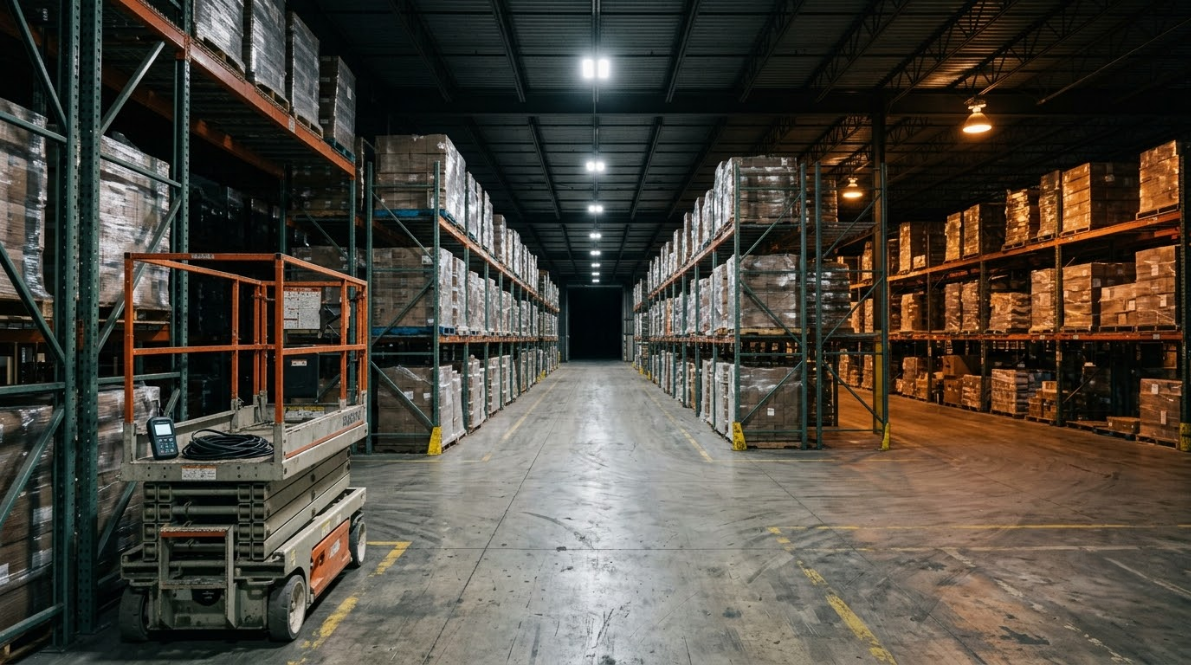
Warehouse and Industrial Lighting
Replacing metal halide and high-output fluorescent high bays with LED, adjusting mounting heights and aiming for the racking layout, and adding motion control in aisles that stand empty most of the shift.
INTERIOR GRID
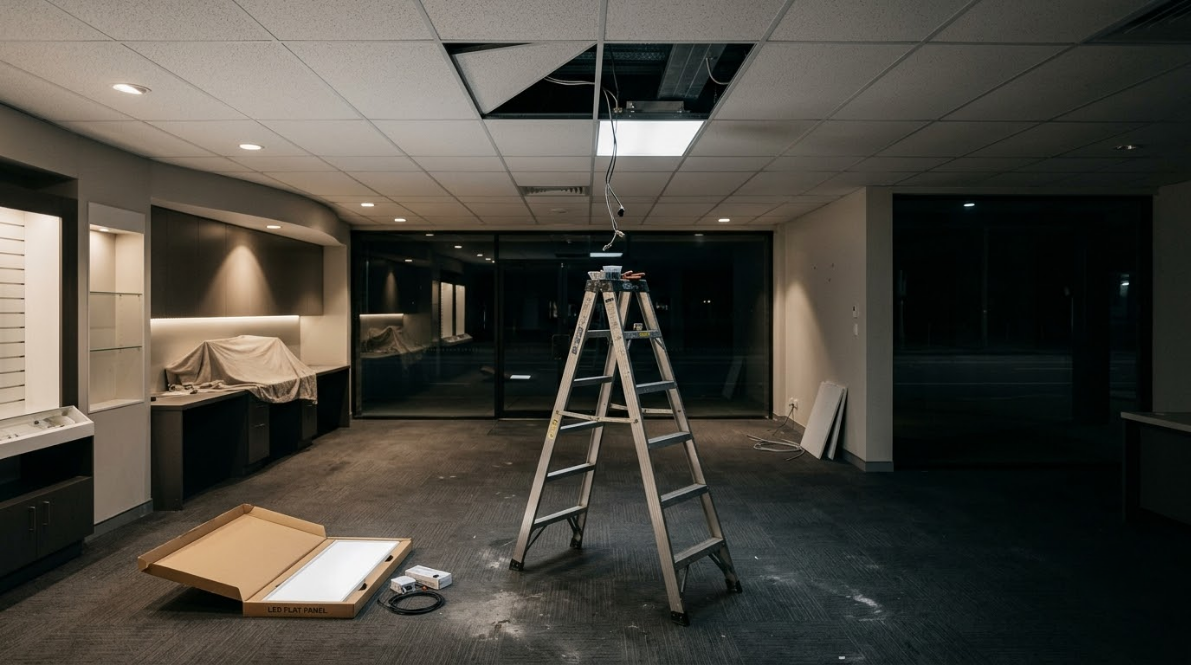
Office and Retail Fixture Replacement
Troffer replacements, retrofit kits, downlights, and accent lighting installed with minimal disruption to a working floor, usually scheduled around trading hours rather than through them. Nights and weekends are normal for us.
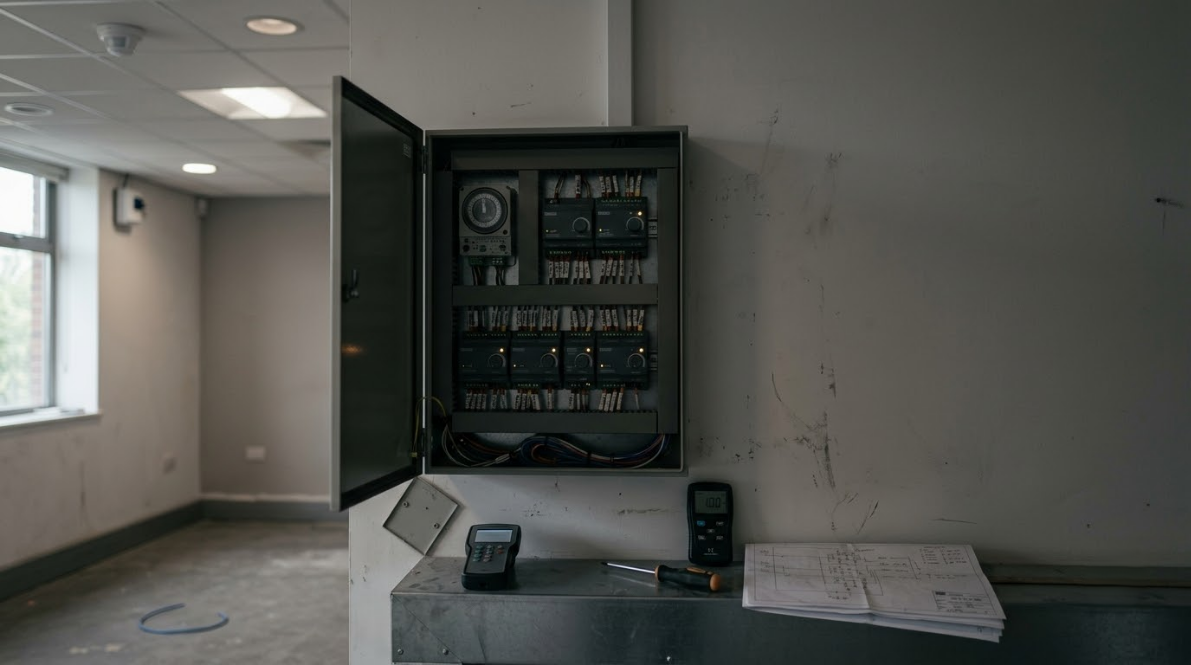
THE CONTROL LAYER
Occupancy, Daylight, and Dimming Controls
Sensors, photocells, time clocks, and zoned dimming commissioned properly, because controls installed and left at factory defaults deliver a fraction of the saving they were bought for in the first place.
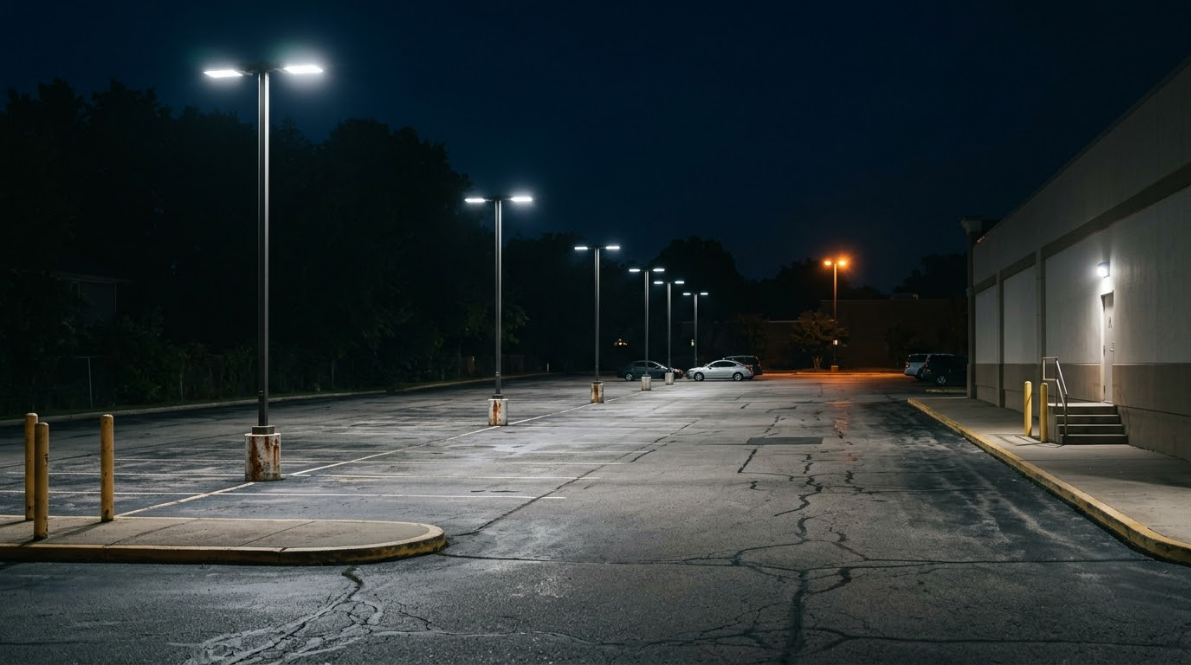
OUTSIDE THE BUILDING
Parking Lot and Exterior Lighting
Pole and wall pack conversions, photometric layout that puts light where people walk rather than into neighboring properties, and fixtures rated for the weather they will actually sit in year round.
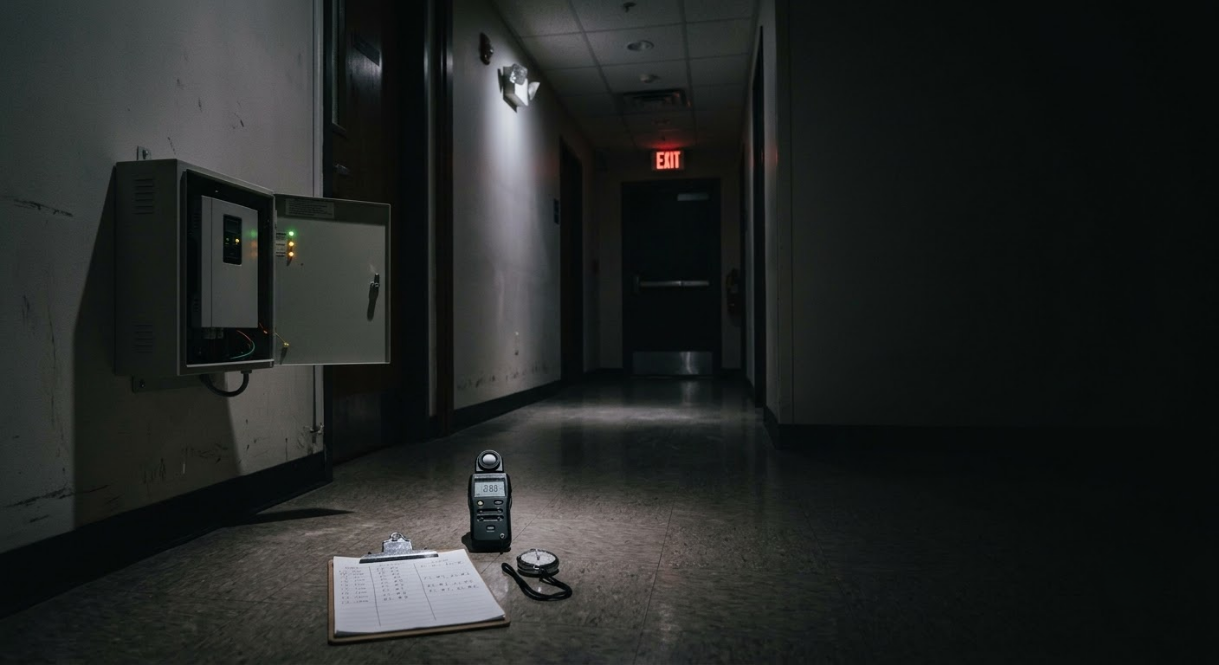
LIFE SAFETY
Emergency and Egress Lighting
Emergency fixtures, exit signs, and inverter systems installed and tested so the path of egress holds 1 foot-candle average for the full 90 minutes the code demands, verified rather than assumed.
THE WORD ON OUR WORK
WHAT OUR CLIENTS SAY.
Warehouse operators tend to call after seeing a neighbor's bill drop, and retail managers call after one too many relamping tickets. Read what Georgia facility teams have said about their retrofits, the rebates, and how quickly the numbers actually moved afterward.
Common Questions
FREQUENTLY ASKED QUESTIONS.
Lighting projects come down to numbers, code, and rebates, in roughly that order. These are the questions owners and facility managers ask before committing to a retrofit.
What is the difference between a retrofit kit and a full fixture replacement?
A kit puts LED components inside the existing housing, which is faster and cheaper where the housing is sound. Full replacement gives better optics, a fresh warranty, and usually better rebate eligibility, which often closes the price gap.
What are DLC-listed fixtures and why do they matter?
The DesignLights Consortium maintains a qualified products list that utilities use to decide rebate eligibility. Specifying a listed fixture is usually the difference between a rebate approved on the paperwork and one refused without any discussion at all.
How do I qualify for lighting rebates?
Use qualifying fixtures, document existing wattages before removal, and file within the program window. 5 Star Electrical LLC assembles that evidence during the work for customers across Atlanta, GA rather than trying to reconstruct it from memory afterward.
What color temperature works best in commercial spaces?
Warehouses and workshops usually suit 5000K for alertness and contrast. Offices and retail read better at 3500K to 4000K, which feels natural without going clinical. Hospitality generally wants 2700K to 3000K. Mixing temperatures in one sightline looks like a mistake.
What lighting controls are required in commercial buildings?
The energy code generally requires automatic shutoff, occupancy sensing in most enclosed spaces, and daylight response near windows and skylights. Exact requirements depend on space type, which is why the control design comes with the fixture design itself.
What are the emergency lighting and exit sign requirements?
Egress paths need 1 foot-candle average and 0.1 minimum, holding at least 90 minutes and never dropping below 0.6 average at the end. 5 Star Electrical LLC tests to that standard across Atlanta, GA on every retrofit we finish.
How long does a commercial LED retrofit take?
A single warehouse bay can be done overnight. A full facility usually runs a week or two, phased by area so nothing closes. Access equipment and fixture lead time drive the schedule more than the electrical work does.
What maintenance do LED fixtures need after installation?
Very little. Periodic cleaning of lenses and reflectors keeps output where it should be, and controls benefit from an occasional check that sensor settings have not drifted. Driver failure is the usual eventual fault, and it is a component swap.
HOW WE WORK
FROM AUDIT TO SWITCH-ON, HERE IS HOW.
STEP 01
Counting and Measuring
We walk the building, count every fixture, record wattages and burn hours, and take light level readings so the before picture is documented rather than merely remembered later. That record is also what the rebate program will ask for.
STEP 02
Modeling the Numbers
Savings, payback, rebate value, and cooling load reduction all get calculated against your operating hours and utility rate. You see the assumptions, not only the conclusion at the bottom. Numbers you cannot check are not worth much.
STEP 03
Specifying Fixtures and Controls
We select DLC-listed fixtures suited to mounting height, ceiling type, and task, then design the control layer the energy code requires and the savings genuinely depend on. Samples are available before you commit to hundreds.
STEP 04
Rebate Filing and Scheduling
Pre-approval paperwork goes in where the program requires it, fixtures are ordered, and work is scheduled by area around your operating hours rather than across them. Nights and weekends are normal on retail floors.
STEP 05
Installation and Disposal
Old fixtures come down and go to proper recycling, new ones go up and get aimed, and lamp waste never becomes your disposal problem or your compliance exposure. Mercury-containing lamps are handled accordingly.
STEP 06
Commissioning and Rebate Closeout
Sensors get set to real occupancy patterns, dimming curves are tuned, emergency fixtures are tested, and the completed rebate documentation goes to the utility with the evidence already attached to it. Nothing gets reconstructed later.
Get Your Free Estimate
SEE YOUR LIGHTING PAYBACK, FREE.
Give us a fixture count and your operating hours and we will model the energy saving, the rebate value, and the payback period for your building specifically. No obligation attached. Start on our contact page.
WHAT YOUR LIGHTING AUDIT COVERS:
✓ Fixture count, wattage, and burn hour survey
✓ Light level readings across the space
✓ Energy saving and payback modeled on your rate
✓ Rebate eligibility and expected value
✓ Control strategy for energy code compliance
✓ Emergency and egress lighting condition review