
Lighting & Ceiling Fan Installation
LIGHTING & CEILING FAN INSTALLATION IN ATLANTA, GA
A ceiling box supports a paddle fan only when the box is listed and marked for that exact purpose, unmarked boxes stop at 35 pounds, and a fan over 70 pounds needs support beyond the box. 5 Star Electrical LLC installs paddle fans, recessed cans, chandeliers, dimmers, and under-cabinet lighting across Atlanta, Georgia and nearby Dunwoody, Norcross, and Peachtree Corners.
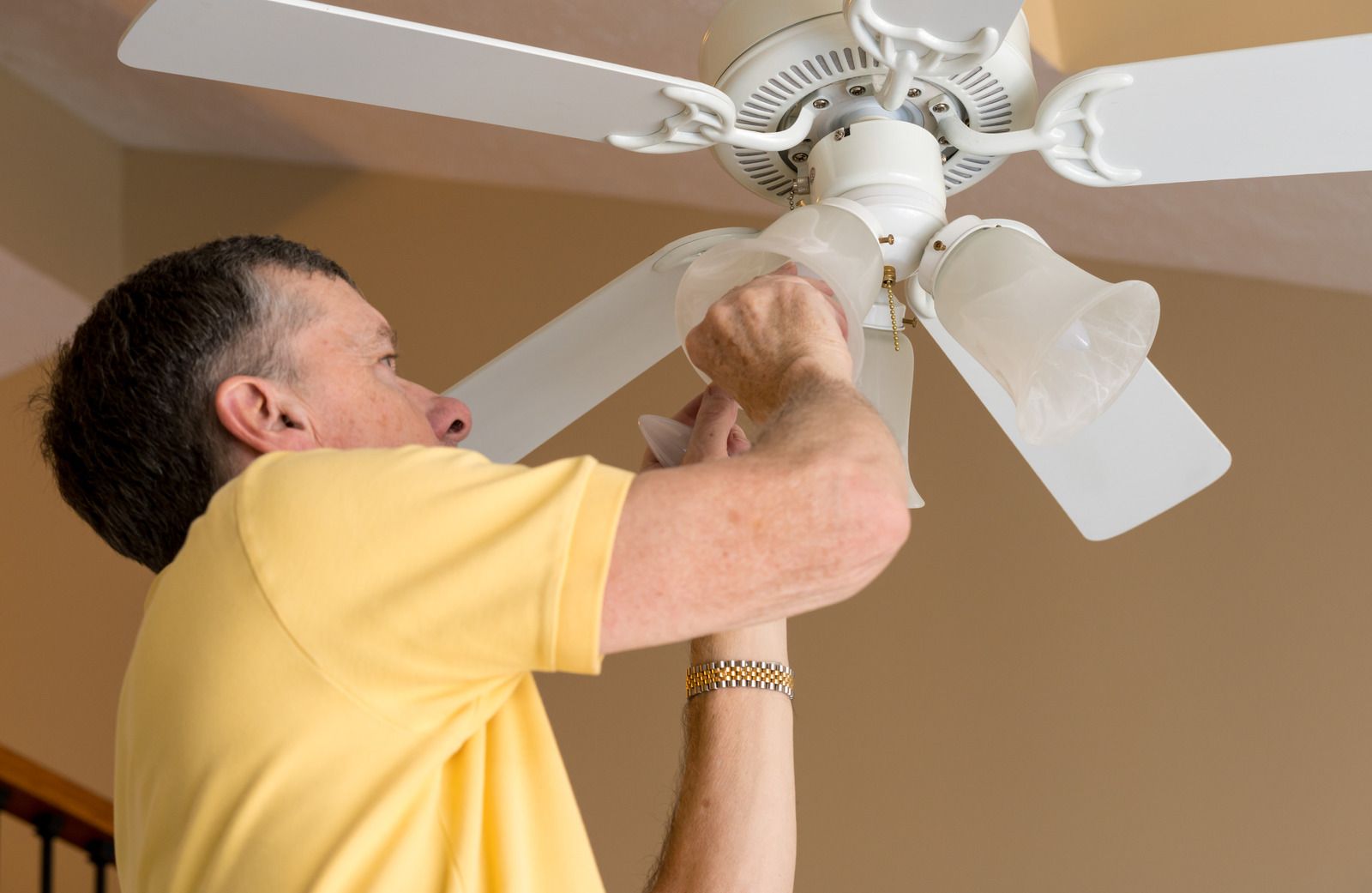
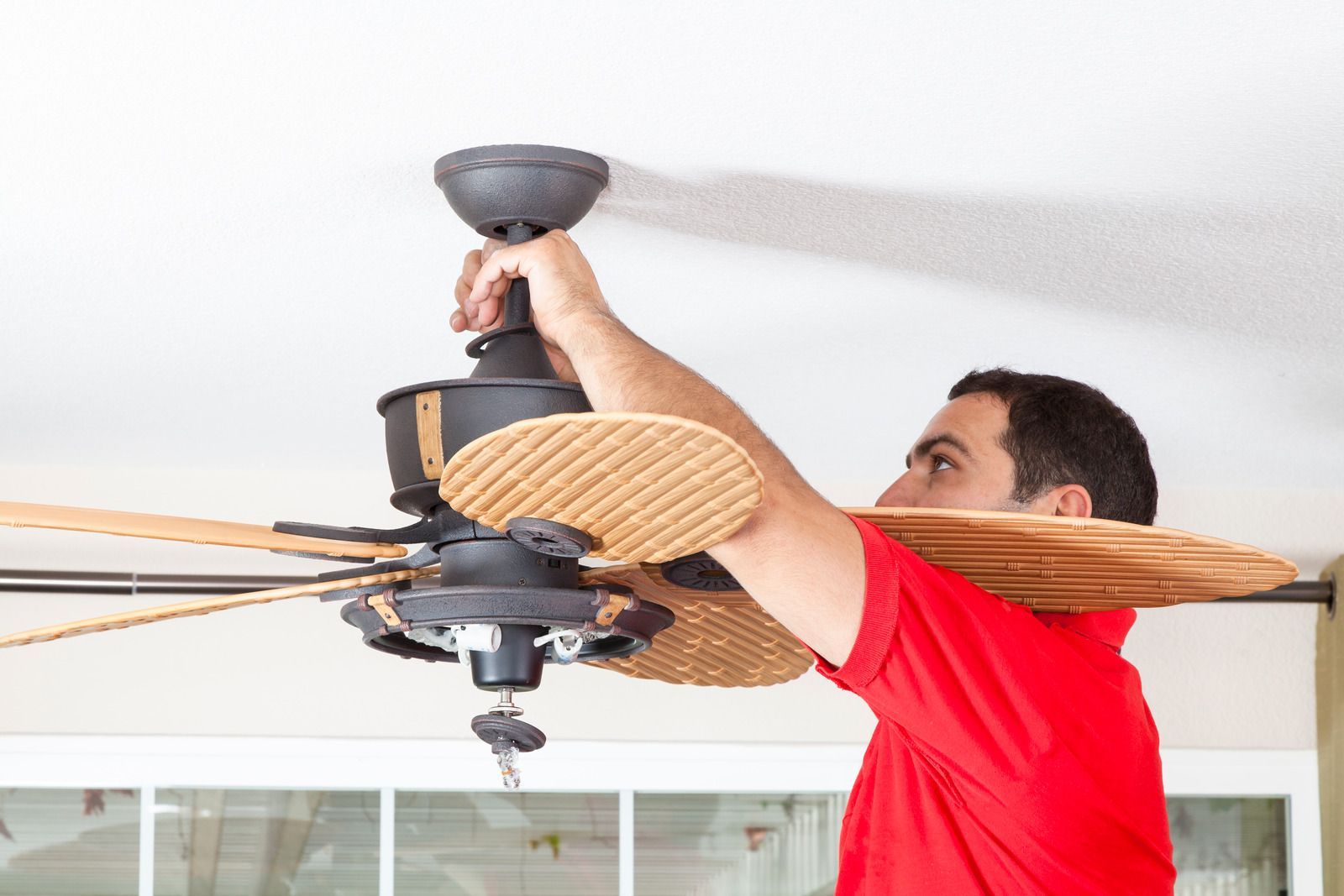
FIXTURES LOOK EASY UNTIL THEY ARE CROOKED.
Everybody notices a light that hangs a degree off, a downlight row that wanders, or a fan that wobbles on its first evening. The electrical part of the job is often the quick part; the setting out, the bracing, and the leveling are what make the room look finished. We treat that as the actual work rather than the tidying up.
We also check dimmer compatibility before installing rather than after, because the most common complaint about new LED lighting is a buzz or a flicker that was entirely predictable. Compatibility lists exist for a reason.
✓ Fan-rated boxes and bracing on every fan installation
✓ Dimmer and LED driver compatibility checked first
✓ Fixtures set level and rows aligned properly
✓ Neutral added where smart switches require one
LIGHTING & CEILING FAN INSTALLATION
LIGHT DECIDES HOW A ROOM FEELS BEFORE FURNITURE DOES.
Layered lighting changes a room more cheaply than almost any other alteration. Downlights for general brightness, under-cabinet strips for the surfaces people actually work on, a pendant to anchor the table, and dimmers so the same room can be bright at breakfast and soft at nine. The wiring behind that is straightforward. The thinking about where light lands is what makes the difference people notice.
HIGH CEILINGS ARE COMMON HERE. SO ARE BAD BOXES.
Two-story foyers, vaulted great rooms, and stairwell landings are everywhere in Metro Atlanta housing stock, and they all share the same problem: the fixture is hard to reach and the box behind it was chosen by whoever framed the house. We arrive with the access equipment, replace the box with something rated for what is actually hanging from it, and set the drop height properly.
CEILINGS HIDE MORE PROBLEMS THAN WALLS DO.
A joist exactly where the downlight was meant to go. A duct run through the only cavity available. Insulation packed against a fixture that is not rated for contact. Old fixture wire that crumbles the moment it moves. Ceilings are where lighting projects go slowly, and experience is mostly about knowing that before quoting rather than discovering it afterward with a customer watching from a ladder.
WHAT GOOD LIGHTING WORK LEAVES YOU WITH
ROOMS THAT WORK AT EVERY HOUR
Layering general, task, and accent light with proper dimming means one room serves breakfast, homework, and a quiet evening without ever feeling like the wrong setting.
FANS THAT DO NOT WOBBLE
A listed, braced box and correctly balanced blades mean the fan runs quietly on high instead of becoming the thing everyone stares at during dinner.
LOWER RUNNING COSTS QUIETLY
Swapping remaining incandescent and halogen fittings for LED cuts lighting energy sharply and removes the ladder work that came with replacing bulbs every few months indefinitely.
NO BUZZ, NO FLICKER
Matching dimmers to drivers before installation removes the single most common complaint about new LED lighting, and it costs nothing to get right at the specification stage.
SMART CONTROLS THAT ACTUALLY FIT
Adding a neutral where the box lacks one means smart switches work as intended rather than being returned after a frustrating evening with the instructions open.
SAFER FIXTURES OVERHEAD
Correct box ratings, IC-rated housings where insulation touches, and damp-rated or wet-rated fittings outdoors mean nothing overhead becomes a problem in 5 years.
Insert Title

Insert Title
Lorem ipsum dolor sit amet, consectetur adipiscing elit. Sed do eiusmod tempor incididunt ut labore et dolore magna aliqua. Ut enim ad minim veniam, quis nostrud exercitation ullamco laboris nisi ut aliquip ex ea commodo consequat.
WHAT WE INSTALL
OUR LIGHTING AND FAN WORK
Lighting jobs range from one fixture on a Saturday to a whole floor of recessed cans and controls. These are the scopes our electricians handle for homes around Metro Atlanta. Small jobs are welcome too.

OVERHEAD AIR
Ceiling Fan Installation and Replacement
Fitting listed fan-rated boxes with proper bracing, hanging and balancing the fan, setting blade height for the ceiling, and wiring separate switching for the light and the motor separately.
INTO THE CEILING
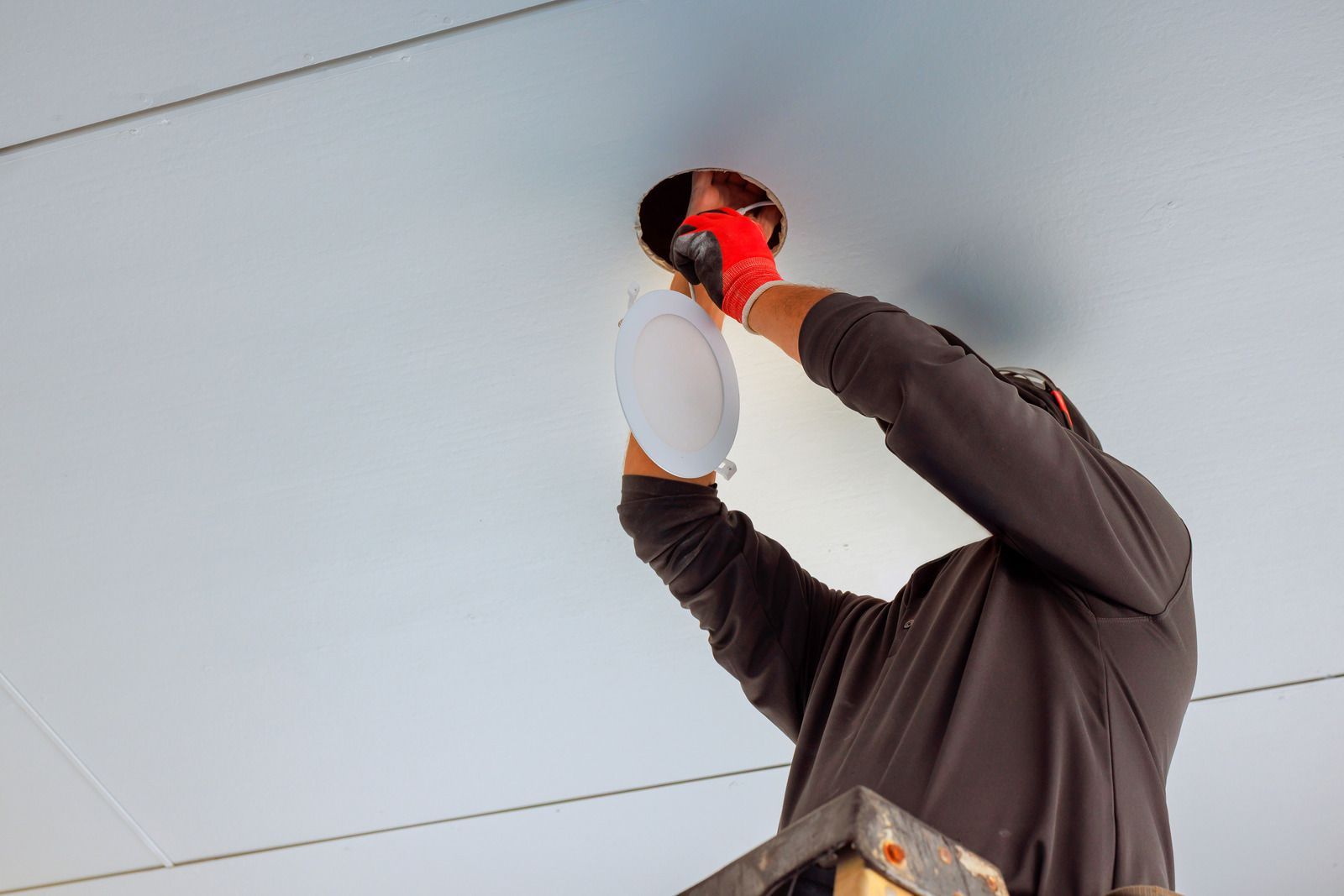
Recessed and Wafer Light Installation
Laying out downlight positions around joists and ducts, cutting cleanly, and using IC-rated or slim wafer fittings appropriate to whether insulation sits against them from above or not.

STATEMENT PIECES
Chandelier and Pendant Installation
Heavy fixtures on high ceilings, including box replacement, support rated for the weight, chain or cable adjustment, and the access equipment a two-story foyer genuinely requires for safety.
WHERE YOU WORK
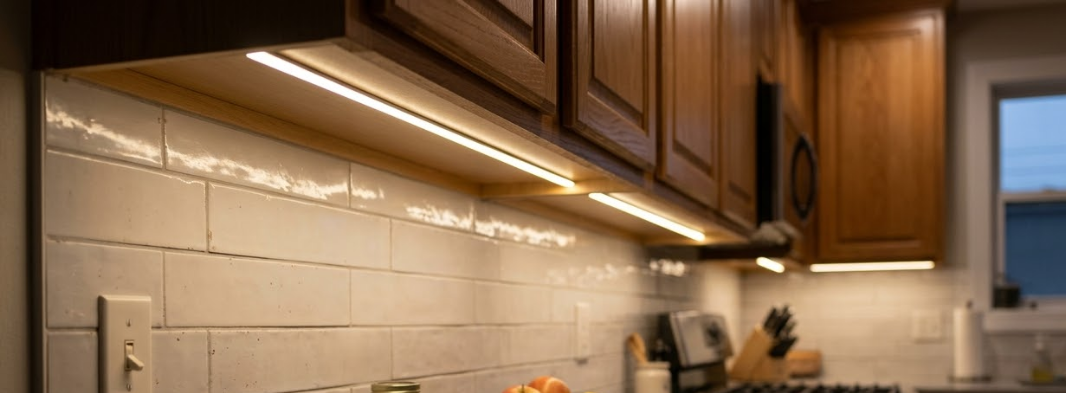
Under-Cabinet and Task Lighting
Continuous LED strips or puck fittings wired to their own switch, positioned toward the front of the cabinet so the light lands on the counter rather than on the backsplash.
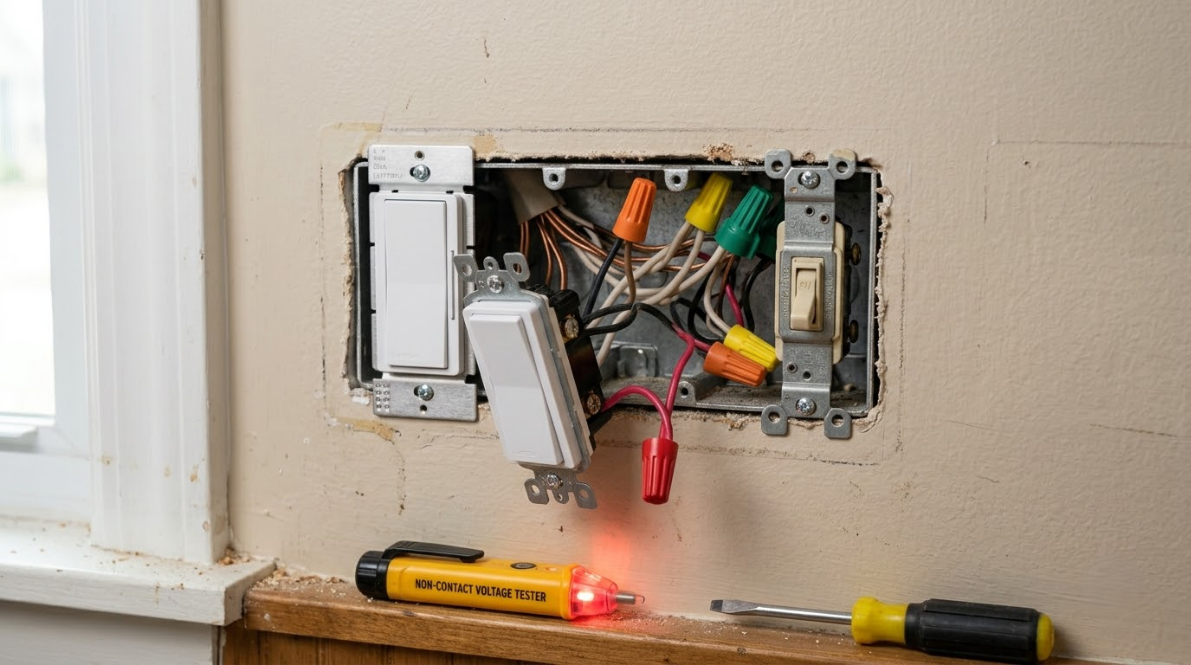
THE CONTROLS
Dimmer and Smart Switch Installation
Dimmers matched to the drivers they will control, three-way and multi-location switching arranged sensibly, and neutrals added where an older box cannot support a smart device otherwise. Older houses often need this.
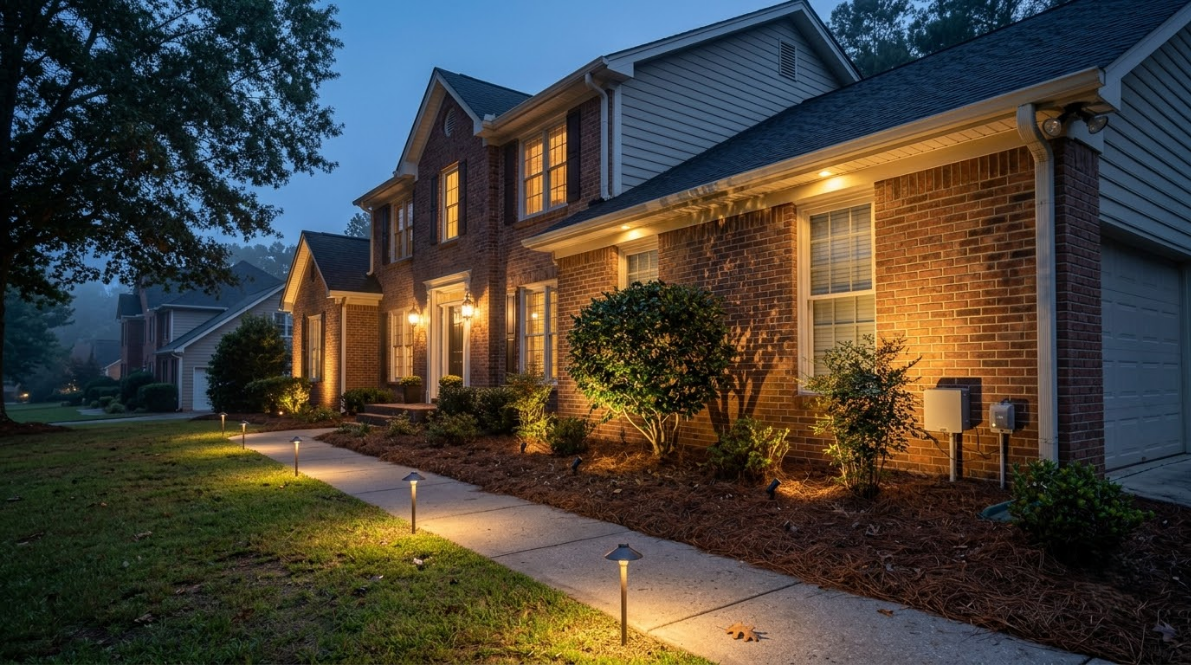
OUTSIDE AFTER DARK
Exterior and Landscape Lighting
Wall lights, soffit downlights, path and uplighting on low-voltage transformers, and security fittings, all using damp-rated or wet-rated equipment suited to where each one actually sits. Georgia weather tests them.
THE WORD ON OUR WORK
WHAT OUR CLIENTS SAY.
Lighting is the work people live with every evening, which makes it the work they talk about. Read what homeowners around Georgia have said about their fans, their downlights, and the difference a properly matched dimmer actually makes to a room.
Common Questions
FREQUENTLY ASKED QUESTIONS.
Fixture questions usually come down to what the ceiling will support and what the switch can control. Here is what homeowners ask us before booking lighting work.
Can I put a ceiling fan where a light fixture is now?
Only if the box is replaced with one listed for fan support. A standard lighting box is not rated to carry the weight or the vibration, and a fan hung from one will eventually work itself loose overhead.
How low should a ceiling fan hang?
Blades should sit at least 7 feet above the floor and roughly 8 to 9 feet gives the best airflow. Keep tips at least 18 inches from walls, and use a downrod on high ceilings. Sloped ceilings need their own kit.
Can recessed lights be installed without attic access?
Yes. Remodel housings and slim wafer fittings are designed to go in from below through a cut hole, clipping to the drywall. Routing the cable between joists from below is the part that takes real skill and patience.
How many recessed lights can go on one circuit?
With LED fittings drawing 10 to 15 watts each, a 15-amp circuit carries plenty. The practical limit is usually the dimmer rating rather than the circuit itself. 5 Star Electrical LLC checks both across Atlanta, GA before installing.
What is an IC rating and when do I need one?
IC means the housing may be in direct contact with insulation without overheating. You need it in insulated ceilings, which is most of them. Non-IC fittings require a clearance that attic insulation rarely respects. Airtight versions reduce drafts too.
Why do my new LED lights buzz or flicker on the dimmer?
Almost always an incompatible dimmer. Older units were built for incandescent loads and cannot control an LED driver smoothly. 5 Star Electrical LLC checks manufacturer compatibility lists before installing anything across Atlanta, GA to avoid exactly this problem.
Can lights be added to an existing ceiling fan?
Often, yes, if the manufacturer offers a light kit for that model and the fan's wiring includes a separate conductor for it. Otherwise the switch loop needs an extra conductor run to the ceiling box. That means opening a wall.
What is the difference between damp-rated and wet-rated fixtures?
Damp-rated fittings suit covered porches and bathrooms where moisture is present but rain is not. Wet-rated fittings withstand direct exposure and belongs on an open patio, a soffit edge, or an exposed wall. Getting it wrong shortens fixture life.
HOW WE WORK
FROM DARK CEILING TO FINISHED ROOM, HERE IS HOW.
STEP 01
Looking at the Room With You
We talk through how the room is used, where light is missing, and what you want to see and not see, then check what the ceiling and existing circuits can actually support.
STEP 02
Setting Out the Layout
Downlight positions are marked and adjusted around joists and ducts before anything is cut, fixture heights are agreed, and switch locations are confirmed while everything can still move. Chalk is cheaper than plaster.
STEP 03
Checking Equipment Compatibility
Fixtures, drivers, and dimmers get matched against manufacturer compatibility data, and box ratings are confirmed for anything with weight or a motor attached to it. This step prevents most callbacks.
STEP 04
Wiring and Boxes
Cable is routed, boxes are replaced or added where the rating demands, bracing goes in for fans, and switch legs are run with the neutral a smart device might later need there.
STEP 05
Hanging and Aligning
Fixtures go up, rows are lined up against a laser rather than an eye, fans are balanced, and heights are checked from where people will actually stand in the room. Crooked is not a finish.
STEP 06
Testing and Tidying
Every fitting is switched, dimmed through its full range, and checked for buzz or flicker. Then debris is cleared, cuts are cleaned up, and the room is handed back ready to use again.
Get Your Free Estimate
PLAN YOUR LIGHTING, FREE.
Send photographs of the room, the ceiling, and the existing fixture, and tell us what you want it to feel like. We will come back with a layout and a quote. Start on our contact page
WHAT YOUR LIGHTING QUOTE COVERS:
✓ Fixture positions set out around joists and ducts
✓ Box ratings and bracing confirmed for every fitting
✓ Dimmer and driver compatibility checked in advance
✓ Switch locations and neutrals planned ahead
✓ Access equipment for high ceilings included
✓ Cleanup and testing before we leave