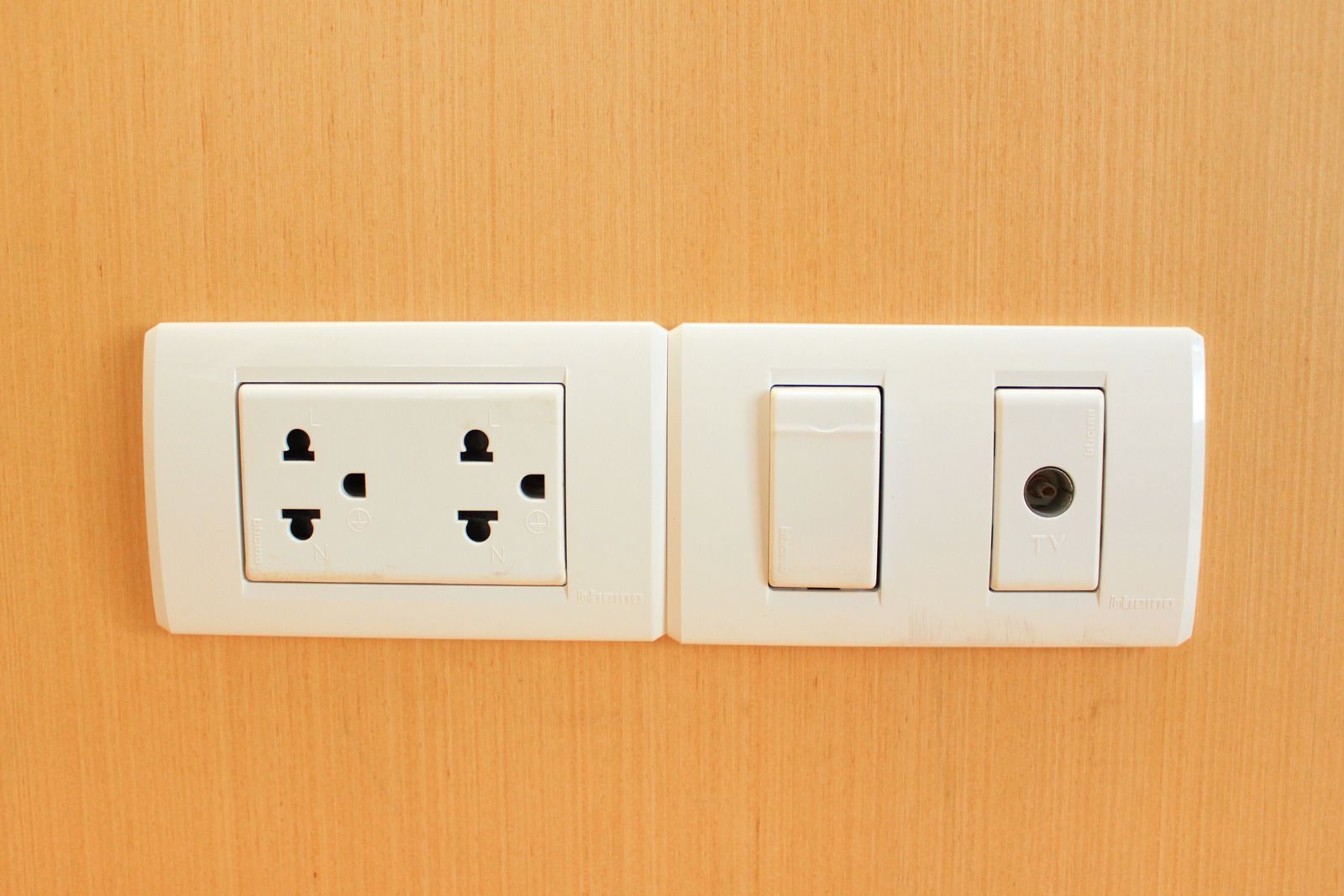
Why Your Breaker Keeps Tripping: Common Causes and Fixes
August 31, 2026
QUICK ANSWER: A breaker keeps tripping because it is sensing a condition that could overheat the wiring, and it shuts the circuit off to prevent damage. The four most common causes are an overloaded circuit, a short circuit, a ground fault, and a failing appliance. Arc-fault and ground-fault breakers add two more possibilities: a loose connection producing tiny arcs, or an electronic device whose signature the breaker misreads. A breaker that trips once and holds is normal. One that trips again the moment you reset it, or trips repeatedly over days, is pointing at a fault that needs to be traced rather than reset away.
It usually happens at the worst moment. The microwave and the coffee maker are both running, someone switches on a space heater in the next room, and half the kitchen goes dark. You walk to the panel, find the one breaker sitting between on and off, and flip it back. An hour later it drops again. That breaker is not malfunctioning. It is doing exactly what it was built to do, and the pattern of when and how it trips is the first clue to what is actually wrong on that circuit.
In Metro Atlanta, where summer air conditioning, portable heaters in older homes, and kitchens full of high-draw appliances all pull hard on circuits that were sometimes wired decades ago, tripping breakers are one of the most common calls an electrician takes. The reasons fall into a short, knowable list.
A Tripping Breaker Is Doing Its Job
A circuit breaker is a mechanical switch with a built-in sensor. When the current passing through it climbs past a safe level, or when it detects the specific electrical fingerprint of a fault, an internal mechanism releases and the switch snaps to off. That is the entire point of the device. It interrupts the flow before the wire behind your walls has time to overheat, degrade its insulation, and become a fire risk.
So the breaker is the messenger, not the problem. Replacing it, or wedging it on, removes the protection you are quietly relying on and leaves the underlying fault in place. The useful work is figuring out what the breaker keeps reacting to. That answer almost always lives in one of the categories below.
The Four Faults Behind Most Tripping Breakers
Overloaded Circuit
This is the most frequent cause by a wide margin. Every circuit is rated for a certain amount of current, and when the devices plugged into it ask for more than that, the wires warm up and the breaker trips. It shows up when several power-hungry items run at once on the same circuit: a hair dryer that pulls up to 1,800 watts, a space heater sitting at a steady 1,500, a microwave, an iron. Warm cords, flickering lights, or a faint buzz on that circuit often precede the trip. The fix is rarely a bigger breaker, because the wire, not the breaker, sets the limit. Spreading the load across circuits or adding a dedicated circuit for a heavy appliance is what actually solves it.
Short Circuit
A short happens when a hot wire touches a neutral or another hot conductor directly, and current surges through with almost nothing to slow it down. This is more serious than an overload. The breaker usually trips instantly, and the moment you reset it, it trips again. Warning signs include a burning smell near an outlet, scorch marks, or a sharp popping sound. A short can hide inside a device, inside an outlet, or in damaged cable, and it should be treated as urgent rather than reset repeatedly.
Ground Fault
A ground fault is a short's close relative: a hot wire finds a path to a grounded surface, such as a metal box, a wet wall, or bare ground wire. Because moisture creates those paths, ground faults show up most in kitchens, bathrooms, garages, and exterior outlets, which is exactly where our humid Georgia summers make trouble. Ground-fault protection is designed to catch this and cut power fast, so a breaker or outlet that trips only in wet areas is a strong hint.
Failing Appliance
Sometimes the circuit is fine and a single device is the culprit. A motor with worn windings, a heating element breaking down, or a frayed internal cord can draw too much current or create an intermittent short. The tell is that the breaker trips only when one specific appliance runs. Unplugging that item and seeing whether the trips stop is one of the fastest ways to confirm it.
TIP: Keep a simple log for a few days. Note the time each trip happens and what was running or being switched on at that moment. A pattern like "only when the dryer starts" or "every time it rains" narrows the search enormously and often turns a long diagnostic visit into a short one.
When an AFCI or GFCI Breaker Keeps Tripping
Newer homes and remodeled circuits often carry arc-fault (AFCI) and ground-fault (GFCI) breakers, and these can trip for reasons an older breaker never would. They are more sensitive by design, because they watch for smaller and more specific dangers.
An arc-fault breaker looks for the erratic micro-sparks that happen when a connection is loose, a wire is damaged, or a terminal has worked its way loose over years of thermal cycling. A backstabbed receptacle, a loose wire nut in a junction box, or a nicked cable can all produce that signature. When one of these breakers keeps tripping, a genuine loose connection somewhere on the circuit is a leading suspect, and finding it is careful work best done with the right meters.
These breakers are also known for nuisance trips, where the electrical noise from an ordinary device, a vacuum, a cheap power supply, an aging motor, mimics the pattern of an arc and trips the breaker even though the wiring is sound. A shared neutral between two circuits can do the same thing. Sorting a real fault from a nuisance trip is the hard part, and it is exactly the kind of puzzle a thermal camera and load testing are built to answer, because guessing wastes time and leaves the real question open.
The Breaker Itself May Be Worn Out
Breakers are mechanical, and mechanical things wear. A breaker that has tripped hundreds of times over its life, or one that runs hot in a crowded panel, can reach a point where its internal spring and contacts no longer work reliably. When that happens it may start tripping at currents well below its rating, or fail to hold a firm on position, or lose the clean snap you feel in a healthy breaker.
Signs of a breaker at the end of its service life include a switch that feels loose or mushy, discoloration or a scorch mark on the breaker or the surrounding panel, a warm spot you can feel with the back of your hand, or a buzzing coming from the panel itself. A worn breaker gets replaced rather than repaired, because it is a sealed unit, and the protection it provides for everything downstream is worth far more than the part.
How to Narrow It Down Safely at Home
A homeowner can do a fair amount of first-pass diagnosis without opening anything. Reset the breaker once, and if it holds, watch for what you were doing when it dropped before. If it trips again immediately, leave it off. To test for an overload, unplug or switch off everything on that circuit, reset the breaker, then add loads back one at a time, waiting a couple of minutes between each, until the trip returns and reveals the offender. If the breaker will not hold even with nothing plugged in, the fault is in the wiring or the breaker itself, not in your appliances.
What should stay with a licensed electrician is anything behind a cover plate or inside the panel. Tracing a short, locating a loose neutral, finding the specific connection that an arc-fault breaker is reacting to, or judging whether a circuit needs to be split all call for test equipment and experience reading how these faults behave, especially in older homes where a junction box may be hidden behind finished drywall. An electrician can trace the fault to its source, correct the cause, and confirm the circuit holds under real load before calling it done.
WARNING: Never defeat a breaker that keeps tripping by replacing it with a higher-rated one, taping it in the on position, or resetting it again and again against a fault. The breaker is protecting wiring that cannot carry more current than it was sized for, and overriding it removes the one safeguard standing between a loose connection and scorched insulation inside the wall.
Frequently Asked Questions
Is it safe to keep resetting a breaker that keeps tripping?
Resetting once is fine if nothing smells hot, looks scorched, or sounds like arcing. If it trips again immediately, leave it off. Repeatedly forcing a breaker against a real fault keeps energizing a circuit already judged unsafe.
Why does my breaker trip only when I turn on one appliance?
That pattern usually points at the appliance. Motors and compressors draw three to four times their running wattage at startup, tipping a circuit already near its limit. Unplugging the device confirms whether the fault is internal.
Why does my breaker keep tripping when it rains or in humid weather?
Moisture is a classic ground-fault trigger. Water reaching an exterior outlet, damp garage box, or unsealed fixture gives current a path to ground. In Metro Atlanta's humid stretches, tripping after rain usually means water is intruding.
Could old wiring be why my breaker keeps tripping?
It can be. Older Atlanta homes carry aluminum branch wiring or connections loosened over decades, and loose connections generate heat and arc-fault trips. An assessment shows whether one bad connection or the whole circuit needs attention.
How do I tell an overload from a short circuit?
Timing gives it away. An overload builds gradually, tripping after several devices run together, often with warm cords first. A short is abrupt, tripping instantly on reset, sometimes with a burning smell or scorch marks.
Does a breaker that keeps tripping mean I need a new panel?
Not always. One overloaded circuit, a faulty device, or a worn breaker explains most trips. A panel upgrade matters when the service is undersized, breakers sit at capacity, or the panel shows heat damage.
What a Tripping Breaker Is Really Telling You
A breaker that keeps tripping is rarely a mystery once the pattern is read carefully. Overloads build slowly and announce themselves with warm cords and dimming lights, while shorts arrive without warning and refuse to hold a reset. Ground faults follow moisture, and failing appliances give themselves away the moment they are unplugged. Paying attention to when the trip happens, and what was running at that moment, turns a frustrating repeat problem into a question with a findable answer.
Some of that tracing work belongs behind a panel cover, where meters and thermal imaging reveal what guesswork cannot. 5 Star Electrical LLC
has spent 8+ years on circuits across Atlanta, GA, from kitchens carrying more load than they were ever designed for to older homes with connections that quietly loosened decades ago. A breaker that has been shutting itself off for weeks is usually pointing at something specific, and specific problems tend to have manageable repairs behind them.