Signs Your Electrical Panel Can No Longer Keep Up With Your Home’s Electrical Demands
October 31, 2026
QUICK ANSWER: An electrical panel can no longer keep up when it trips breakers under ordinary loads, runs out of open spaces for new circuits, feels warm or smells scorched, shows rust, scorch marks, or crackling sounds, or relies on doubled up breakers and extension cords to feed a home that has outgrown it. These signs usually appear gradually as a household adds appliances, electronics, and chargers that the original panel was never sized to serve. A panel under strain is not just inconvenient, because overloaded components run hot, and heat inside an enclosure packed with connections is where small problems become serious ones. Some signs call for a prompt look from a licensed electrician, and a few call for shutting things down until one can arrive.
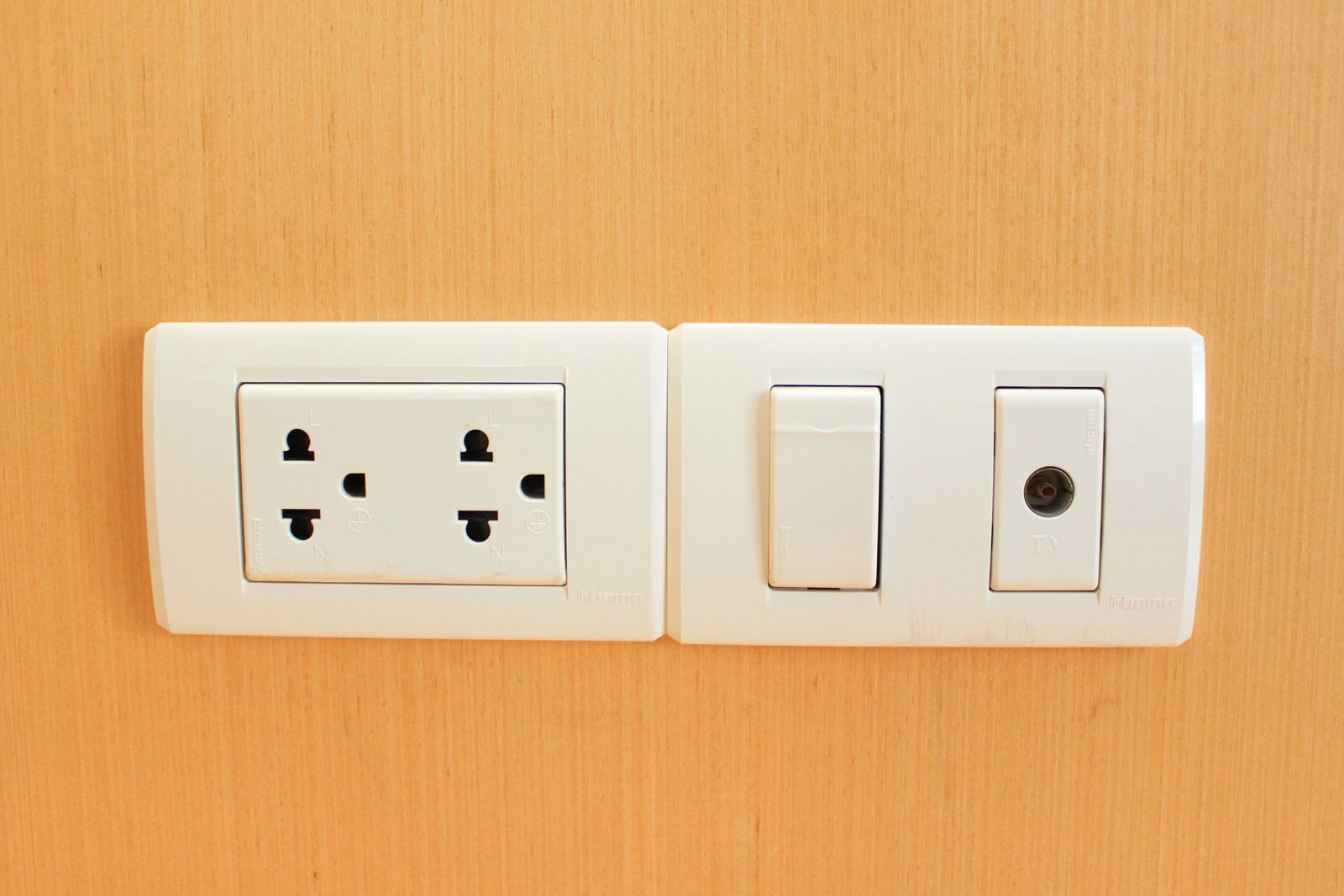
The cover plate behind the recliner has been warm for a couple of weeks now, warm enough that you noticed it while vacuuming, warm enough that you have started avoiding that particular outlet without ever really deciding to. Down the hall, the switch for the dining room light has picked up a faint hum, the kind of sound you only notice in a quiet house late at night. Neither problem has stopped anything from working. The lamp still turns on. The light still comes up when you flip the switch. That is exactly what makes both easy to ignore, and exactly what makes them worth paying attention to.
Heat and noise at an electrical device are not cosmetic. They are physical evidence of current meeting resistance somewhere it was not designed to, and resistance inside a circuit built to carry a fixed, known amount of current does not resolve itself. It tends to get worse, slowly and quietly, until it does not.
Why Panels Fall Behind the Homes They Serve
A panel is sized for the household that existed when it was installed. Many homes across Metro Atlanta, from the older bungalows near Chamblee and Marietta to the 1980s and 1990s subdivisions in Lawrenceville, Duluth, and Norcross, were wired for a very different pattern of use. Back then, a typical home ran a few lamps, a television, a refrigerator, a range, and perhaps a window air conditioner. Today the same square footage holds several televisions, gaming systems, a home office, multiple phones and tablets on chargers, a dedicated freezer, a larger HVAC system, and increasingly a vehicle that needs to charge overnight.
Each of those additions draws from the same panel. A panel does not wear out the way a tire does, but it does reach a ceiling. Once the combined demand of the circuits approaches what the main breaker and the busbar inside the panel can safely deliver, the system starts to show strain. The signs below are how that strain announces itself.
Breakers That Trip Under Ordinary Use
A handful of conditions account for most of these calls, and they range from a single loose screw to a circuit that has quietly outgrown its wiring.
Loose Or Backstabbed Connections
Many outlets and switches, including plenty installed quickly during original construction, use the push-in holes on the back of the device instead of the screw terminals on the side. That kind of connection relies on a small spring clip gripping a single strand of wire, a much smaller contact area than a properly tightened screw terminal provides. The reduced contact is enough to create resistance on its own, and that resistance, combined with years of thermal expansion and contraction as the circuit heats and cools with use, tends to loosen the connection further over time.
Overloaded Circuits
A circuit carrying more current than it was sized for heats up along its entire length, not just at one spot. If a switch or outlet on that circuit runs warm, the more useful question is what else draws power on the same run, and whether the load needs to be redistributed to another circuit rather than the single device being swapped out.
Worn Or Failing Devices
Outlets and switches are mechanical parts with moving pieces inside. The metal contacts in a toggle switch wear down after thousands of on and off cycles, and the spring tension inside a receptacle weakens with age and repeated use. A device that has been in service for fifteen or twenty years can fail this way even when the wiring behind it is in good condition.
Aging Aluminum Wiring
Homes wired with aluminum branch circuit conductors, common in construction from the mid 1960s into the mid 1970s, show this symptom more often than copper-wired homes. Aluminum expands and contracts more than copper as temperatures change and oxidizes at the connection point, and both effects work against a joint that was tight when it was first installed.
Switches And Dimmers Paired With The Wrong Load
A dimmer or toggle switch is rated for a specific type and wattage of load. Pairing an older dimmer with bulbs it was never designed to regulate, or running any switch well past its rated capacity, produces the same resistance and heat that a loose wire does, just from a different starting point.
TIP: Keep a simple note on your phone for a couple of weeks. Write down which breaker tripped, what time it was, and what was running in the house. A clear pattern, such as the main breaker tripping every evening when cooking and laundry overlap, gives your electrician a head start and makes the diagnosis faster and more accurate.
A breaker that will not stay reset, or one that feels loose or soft when you flip it, is a separate matter. Breakers are mechanical devices with internal springs and contacts, and they can wear. A breaker that has tripped many times under load can lose some of its ability to hold, and one that has been run hot can become unreliable. Those are worth having evaluated directly rather than simply replaced with the same part and hoped for the best, because a failing breaker is sometimes a symptom of heat or a loose connection in the panel itself..
Lights That Dim or Flicker When Big Appliances Start
Large motors draw a surge of current when they start. When a compressor, a well pump, or a dryer drum begins to turn, it can pull hard enough to cause a momentary dip in voltage across the house. A brief, slight dim in the lights is not unusual in any home. What deserves attention is a pronounced dim, a flicker that lasts more than a moment, or dimming that has become more noticeable over time.
When the effect is strong and shows up across many rooms rather than one, it suggests the service and the panel are working near the limit of what they can deliver, or that a connection somewhere in the supply path has developed resistance. Resistance at a connection point both wastes power as heat and lowers the voltage available downstream. That heat is the reason a persistent dimming problem is worth investigating rather than tolerating. A technician with a meter can measure the voltage under load, check the connections at the main lugs, and tell you whether the issue is capacity, a loose termination, or something at the utility side of the connection.
No Open Spaces, and Breakers Doing Double Duty
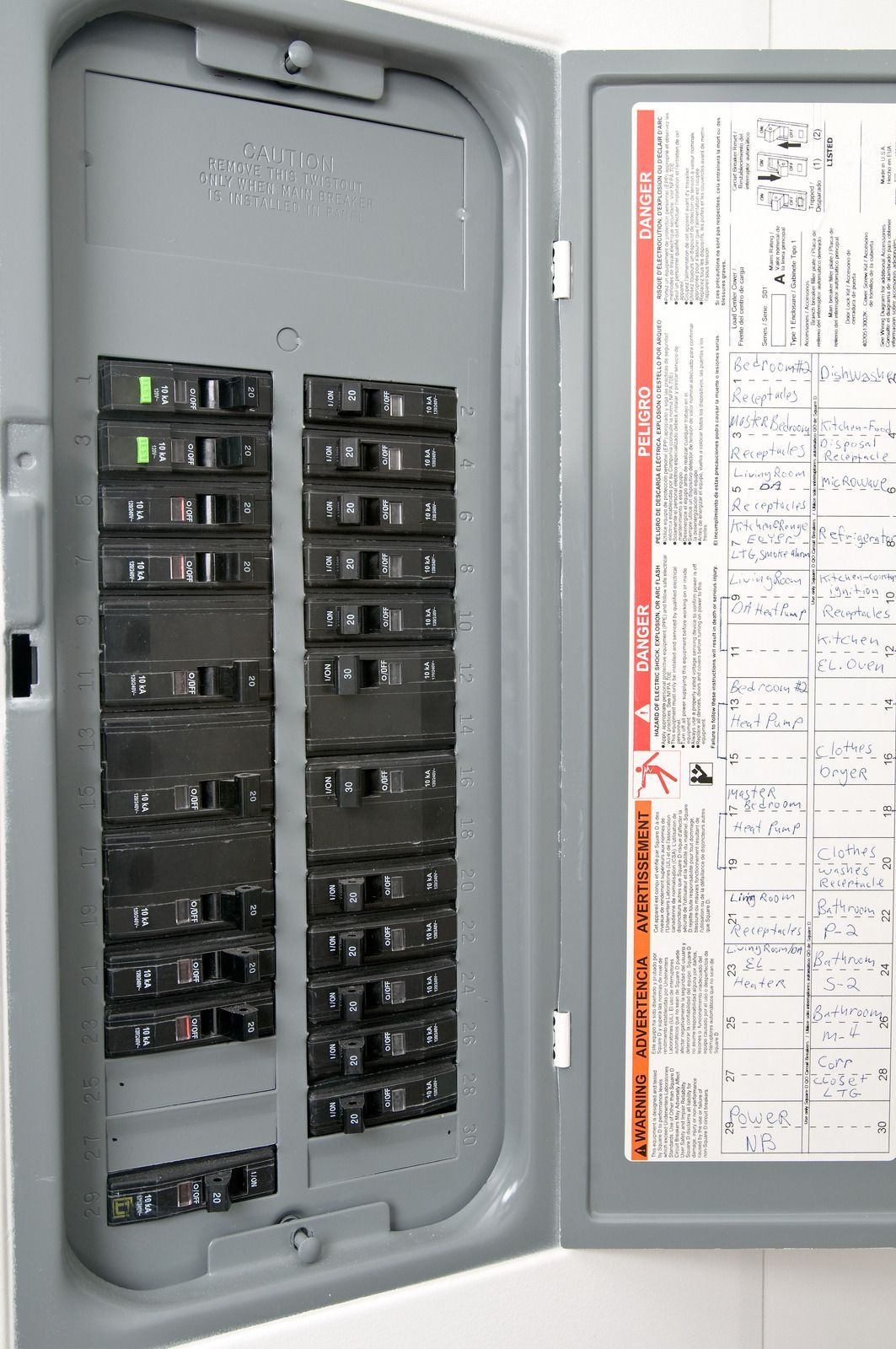
Open the panel door and look at the rows of breakers. Every slot represents one position where a circuit can connect. A panel with no empty spaces has no room to add a circuit for a new kitchen appliance, a workshop, a finished basement, a hot tub, or a vehicle charger.
When a panel is full, there are a few ways households try to work around it, and not all of them are good ideas. One is to connect a new load to an existing circuit that is already busy, which only moves the overload to a different place. Another is to use breakers that fit two circuits into one slot, sometimes called tandem or twin breakers. Panels are built to accept those only in specific positions and only if the panel is rated for them, and a panel that has been stuffed with them well beyond its design is a panel that has been stretched past what it was meant to do. A third is to connect two wires under one breaker terminal that was designed for a single conductor, which can leave a loose, heat prone connection.
If your panel is full, or if you can see that someone has crowded it with workarounds, the honest answer is usually that the home needs more panel. A larger panel with more spaces, or a subpanel that adds room for a defined group of new circuits, gives the system space to grow without forcing every addition to compete for the same few slots.
Heat, Smell, and Sound Coming From the Panel
This group of signs matters most. A panel should be quiet, cool, and odorless. A few things should never be ignored.
A panel cover that feels warm to the touch, particularly near the main breaker, indicates that something inside is generating heat. Occasionally that is simply a heavily loaded system on a hot day, but a cover that is noticeably warm deserves an inspection. A scorched or burning plastic smell near the panel, discoloration on the cover or on the wall around it, or brown marks around a breaker all point to overheating at a connection. A buzzing, crackling, or sizzling sound from inside the enclosure suggests arcing, which is electricity jumping a gap where it should be flowing through a solid connection. Arcing generates intense local heat, and it is one of the more dangerous conditions a panel can develop.
WARNING: If you smell burning near the panel, hear crackling or sizzling from inside it, or see scorch marks or melted plastic, do not open the panel and do not keep using the circuits that feed from it. Switch off what you safely can, keep everyone away from the panel, and call a licensed electrician immediately. If you see smoke or flames, leave the building and call emergency services.
Moisture is another warning. Rust on the cover or on the breakers, water stains on the wall behind a panel, or a damp basement or garage wall in the vicinity all suggest water has been reaching components that must stay dry. In Georgia's humid climate, a panel mounted in a garage, a basement, or on an exterior wall can accumulate condensation and corrosion over the years. Corroded connections have higher resistance, and higher resistance means more heat and less reliable protection.
Equipment That Reflects an Older Generation of Panels
Some panels reveal their age in the way they look. Fuse boxes, rather than breaker panels, are a clear sign that a home's electrical system dates to an earlier era and was designed around a much smaller demand. Fuses blow when overloaded, and households sometimes keep swapping in a higher rated fuse to stop the blowing, which defeats the entire purpose of the protection. If you are still running on fuses, a conversation about a modern panel is worthwhile.
Even among breaker panels, certain older designs have a reputation among electricians for unreliable breakers or for connections that loosen with time. A licensed electrician can look at the make and model, check the condition of the busbar and breakers, and tell you whether it is a panel that can be maintained or one that has reached the end of its useful service. You do not have to guess from the outside. An inspection with the cover removed reveals things the homeowner cannot see, such as discoloration on a busbar, signs of past overheating, or breakers that have been fitted into positions they were not designed for.
Warning Signs That Arrive With New Equipment
Sometimes the trigger for noticing the panel is something you are about to add rather than something that has gone wrong. A few projects regularly expose a panel that cannot keep up.
Adding a vehicle charger is one of the most common. A Level 2 charger is a large continuous load, and it needs its own dedicated circuit. A panel with no spare capacity cannot take it without help. A room addition, a finished basement, a converted garage, or a new kitchen with more appliances can do the same. So can a larger heat pump or air conditioner, an electric range replacing a gas one, or an electric tankless water heater. When the planned addition would push the combined demand beyond what the service can supply, the answer is typically a panel upgrade, sometimes along with an increase in the size of the service coming into the house.
This is where a load calculation is useful. Rather than guessing, an electrician adds up the real demand of the home using accepted methods and compares it to what the service can deliver. That calculation tells you whether you have room to spare, are right at the edge, or are already beyond it. It turns a vague worry into a clear answer.
What an Evaluation Looks Like
A good panel evaluation is not a quick glance and a verdict. It begins with a conversation about what you have noticed: which breakers trip, when the lights dim, what you plan to add. Then the electrician inspects the panel with the cover removed, looking for heat damage, loose or corroded connections, mismatched or crowded breakers, and the condition of the busbar and the main breaker. Readings are taken under load, and a thermal camera can reveal a hot connection that is invisible to the eye. The panel schedule, the label that tells you what each breaker controls, is checked for accuracy, because a legible, correct label is a safety feature in its own right.
From there, you should leave with a clear picture. Perhaps the panel is sound, and a couple of circuits need to be rebalanced or added. Perhaps a subpanel solves the space problem. Perhaps the panel itself should be replaced, and the service upsized to meet today's demand and tomorrow's. The point of the evaluation is to match the fix to the real cause rather than selling more than the home needs or less than it requires.
Frequently Asked Questions
How do I know whether my panel is the problem or just one circuit?
A single breaker that trips is usually a circuit issue. When several breakers trip in different parts of the house, when the main breaker trips, or when the panel itself shows heat, noise, or corrosion, the panel is the more likely cause. An electrician can confirm by measuring and inspecting rather than guessing.
Is it safe to keep using a panel that trips often?
A breaker that trips is doing its job, and the trip itself is not the danger. The concern is what the trips reveal and what happens when people respond by resetting repeatedly or by using workarounds. If trips are frequent, or if there is any warmth, smell, or sound from the panel, have it checked before continuing as usual.
Will adding a vehicle charger always require a new panel?
Not always. Some panels have the capacity and a free slot to support a dedicated charging circuit, and a load calculation confirms it. Others do not, and in those homes a panel upgrade or subpanel is the sensible way to add the charger without overloading the system.
A Healthy Panel Keeps Your Whole Home Running
Most of the time, a struggling panel does not fail dramatically. It speaks up in small ways, like a breaker that clicks off too often, a light that dims, or a cover that feels a little warm. Each hint is easy to dismiss alone, but together they form a pattern worth respecting. Catching it early lets the fix be planned properly instead of being rushed after something goes wrong at night.
Whether the answer is a few small corrections or a full replacement, the goal stays the same: a system that carries the household you actually have, with room for what comes next. With 8+ years of experience serving Atlanta, GA, 5 Star Electrical LLC
has seen how much calmer a home feels once its panel is sized, labeled, and maintained the right way. A well kept panel quietly supports every meal, every charge, and every night.